


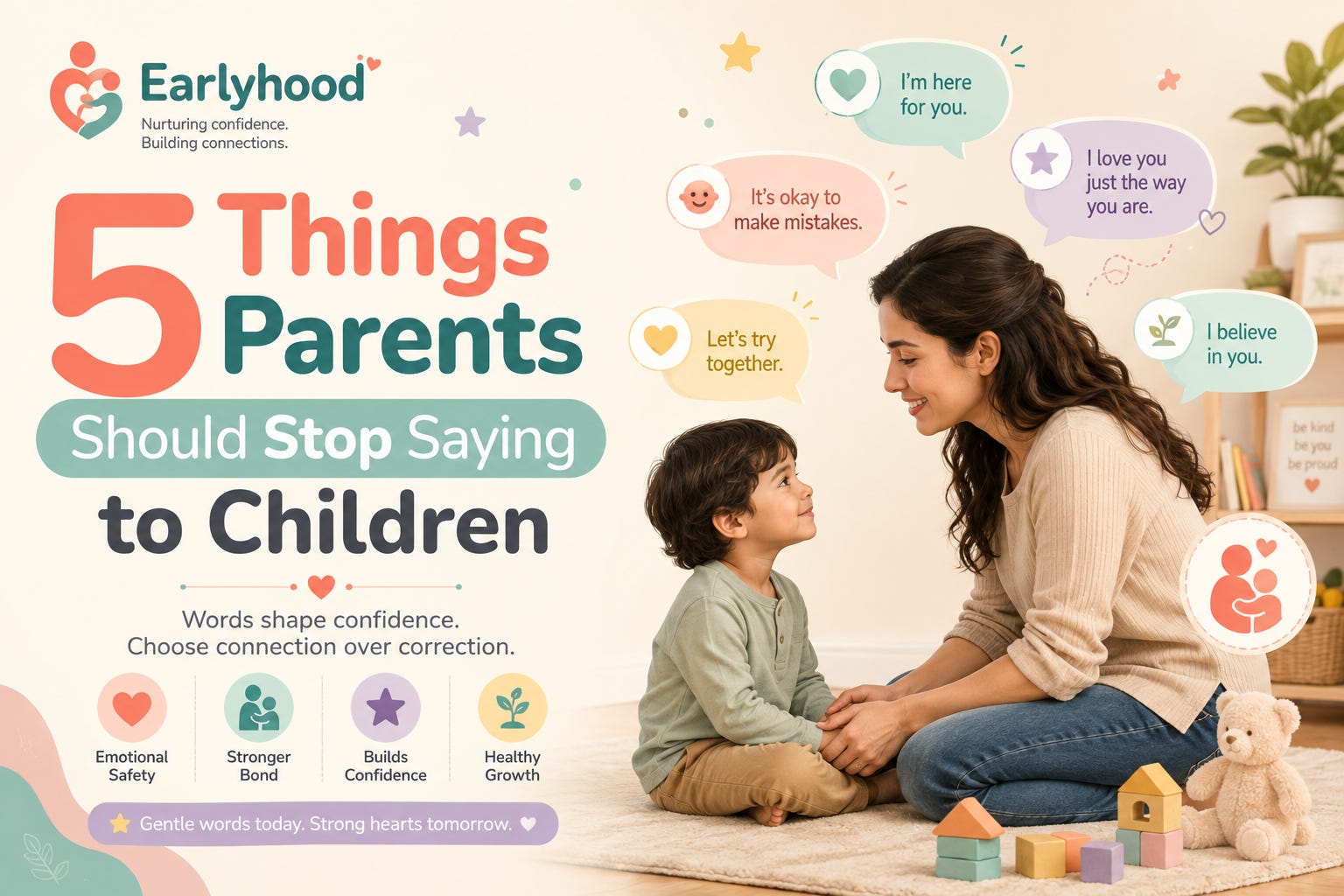
Parents speak thousands of small sentences to children every week.
Some sentences are loving. Some are practical. Some come out during stress, hurry, anger, tiredness, or frustration. Most parents do not mean to hurt their children. They are simply trying to correct behaviour, finish routines, or manage daily pressure.
But children take words seriously.
The way parents speak becomes part of how children understand themselves. A repeated sentence can slowly become a child’s inner voice.
That is why parenting is not only about what we do. It is also about what we say.
The goal is not to become a perfect parent. No parent speaks perfectly all the time. The goal is to notice a few common sentences that may create shame, fear, pressure, or confusion, and replace them with words that guide the child better.
Here are 5 things parents should try to stop saying to children — and what to say instead.
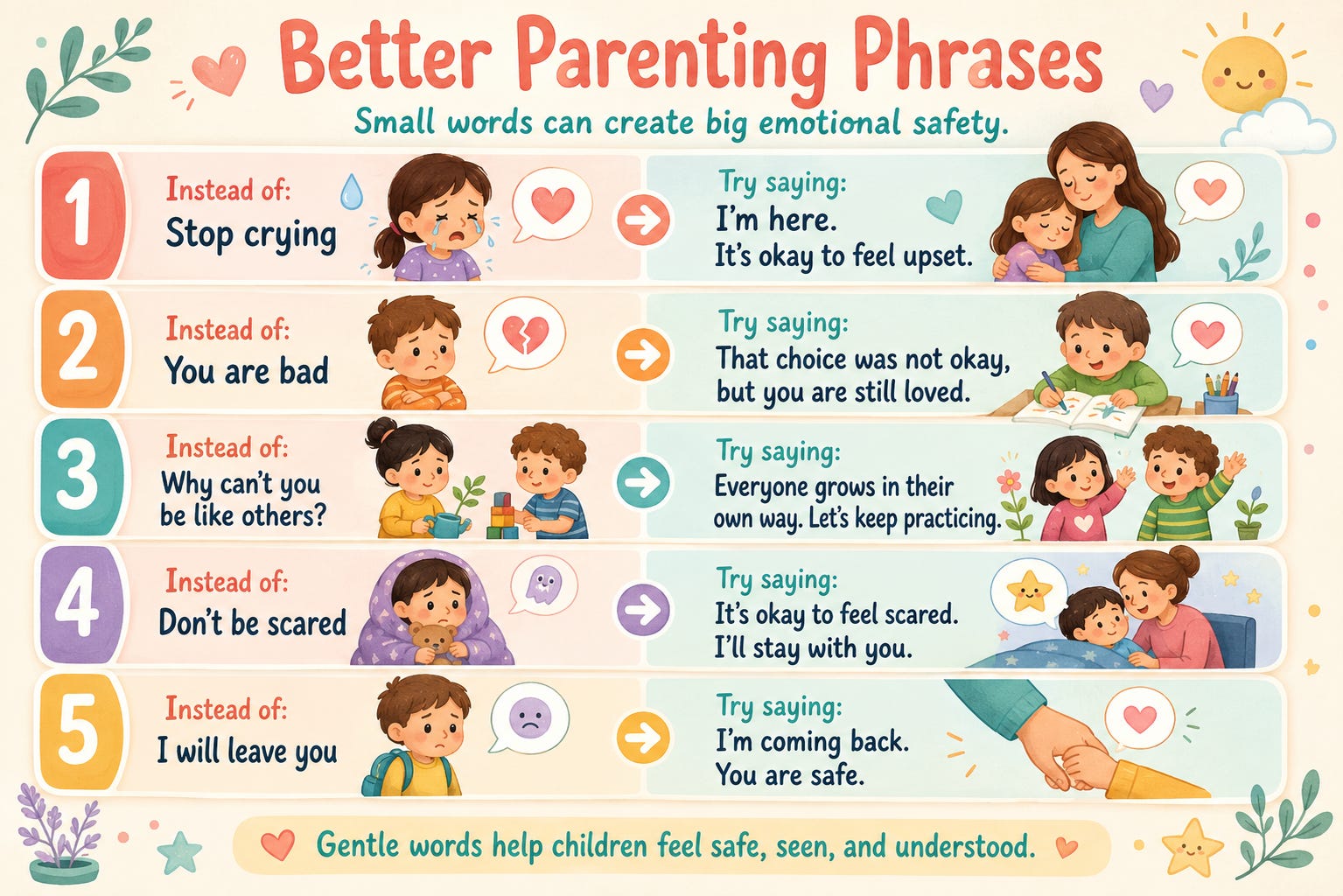
1. “Stop crying.”
Many parents say “stop crying” when a child is upset, hurt, tired, disappointed, or having a tantrum.
It may feel like a simple instruction, but to a child it can sound like:
“My feelings are not allowed.”
Crying is communication. Young children do not always have the words to explain sadness, fear, anger, tiredness, pain, or frustration. So they cry.
Instead of stopping the emotion immediately, help the child feel safe first.
Say:
“I can see you are upset.”
“It is okay to cry.”
“I am here.”
“You wanted that toy, and it was hard when I said no.”
“Take your time. We will solve it together.”
This does not mean giving in to every demand. Parents can still hold boundaries.
For example:
“You can cry, but I cannot allow hitting.”
“I know you want more chocolate, but the answer is no.”
The message becomes clear: feelings are allowed, unsafe behaviour is not.
2. “You are a bad boy/girl.”
Children make mistakes.
They hit, shout, throw toys, refuse food, lie, grab, cry, or break rules. These behaviours need correction. But calling the child “bad” attacks the child’s identity, not the behaviour.
When a child hears “you are bad” repeatedly, they may begin to believe they are the problem.
Instead, separate the child from the behaviour.
Say:
“Hitting is not okay.”
“Throwing toys can hurt someone.”
“I will not let you push.”
“You are angry, but we use words.”
“This behaviour needs to stop.”
This teaches the child what went wrong without making them feel unloved.
A child should know:
“I made a mistake” — not “I am a mistake.”
Correction works better when children still feel connected to the parent.
3. “Why can’t you be like your brother/sister/friend?”
Comparison is one of the most painful things children hear.
Parents may compare children to motivate them, but comparison often creates shame, jealousy, insecurity, or resentment.
Every child has a different pace.
One child may speak early. Another may take time. One may be social. Another may be shy. One may eat well. Another may struggle with food. One may enjoy writing. Another may prefer movement and play.
Comparison tells the child:
“Someone else is better than me.”
Instead of comparing, focus on the child’s own progress.
Say:
“You are learning slowly, and that is okay.”
“Yesterday you tried one bite. Today let’s try again.”
“You cleaned two toys. Now let’s do two more.”
“You are getting better with practice.”
“Your journey is yours.”
This builds confidence without making the child feel less than others.
4. “Big children don’t get scared.”
Children get scared of many things.
Dark rooms, loud sounds, strangers, dogs, water, school, stage performance, separation, doctors, toilets, insects, or sleeping alone can feel very real to them.
When parents say, “Big children don’t get scared,” the child may feel ashamed of fear.
Fear does not disappear because we deny it. It reduces when the child feels supported.
Instead, say:
“You feel scared. I understand.”
“It looks big right now.”
“I will stay with you.”
“Let’s try one small step.”
“You can hold my hand.”
“Brave means trying even when you feel scared.”
This helps the child build courage without feeling judged.
A child who feels accepted becomes more ready to try.
5. “I will leave you here.”
Many parents say this when a child refuses to walk, leave a shop, come from the park, or cooperate in public.
“I am going.”
“I will leave you here.”
“Bye, I am going without you.”
It may work for a moment because the child becomes scared. But it can create fear and insecurity.
Young children depend deeply on parents for safety. Threatening to leave them can make them panic, especially in unfamiliar places.
Instead, use clear and firm guidance.
Say:
“It is time to go. You can walk or I can carry you.”
“We are leaving the park now.”
“I know you want more time, but we have to go.”
“You can hold my hand or hold the bag.”
“Two more steps, then we reach the car.”
The boundary is still clear, but the child does not feel abandoned.
What Parents Can Say More Often
Children need correction, but they also need encouragement.
Use more sentences like:
“I am listening.”
“Try again.”
“You are safe.”
“I love you, even when I am upset.”
“Let’s solve this together.”
“You can make a better choice.”
“I know this is hard.”
“I am proud of your effort.”
“You are learning.”
“Thank you for trying.”
These words become emotional support for the child.
What to Do When You Say the Wrong Thing
Every parent says something they regret.
Maybe you shouted. Maybe you compared. Maybe you said “stop crying” too harshly. Maybe you threatened or used a label in anger.
Repair matters.
You can go back and say:
“I am sorry I shouted.”
“I should not have said that.”
“I was upset, but I love you.”
“Let me say it again in a better way.”
“You are not bad. The behaviour was not okay.”
This teaches children that mistakes can be repaired.
It also teaches them how to apologise.
A parent does not need to be perfect to raise an emotionally secure child. A parent needs to be willing to reconnect.
How to Change Your Language Slowly
Do not try to change everything overnight.
Pick one sentence first.
For example, replace “stop crying” with “I can see you are upset.”
Practice it for one week.
Then replace another sentence.
Parenting language changes through repetition, just like children’s habits.
You can even write reminder lines on your phone or fridge:
“Name the feeling first.”
“Correct behaviour, not identity.”
“Guide without comparison.”
“Comfort fear before courage.”
“Set limits without threats.”
Small changes in language can slowly change the emotional environment at home.
Earlyhood Tip
Use this simple rule:
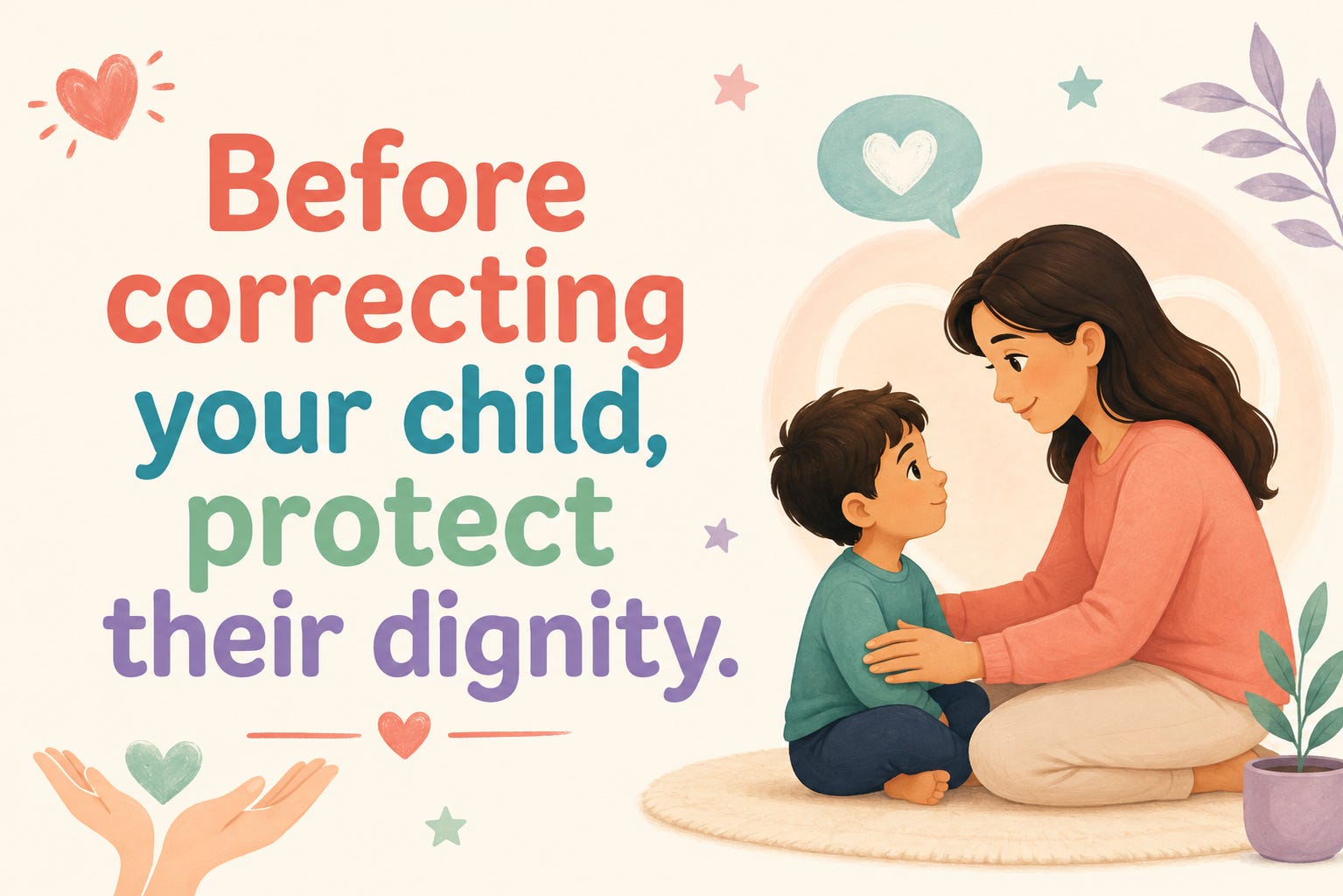
Before correcting your child, protect their dignity.
A child can learn better when they feel respected.
Correction with shame may stop behaviour for the moment. Correction with connection teaches better behaviour for life.
Final Thought
Words shape childhood.
A sentence said once may be forgotten. A sentence repeated often can become part of a child’s confidence, fear, self-belief, or emotional safety.
Parents do not need perfect words all the time.
But they can choose better words more often.
Stop saying things that shame, compare, threaten, or dismiss feelings. Start using words that guide, comfort, correct, and connect.
Because children remember how they felt in everyday moments.
And warm words can become the foundation of a stronger parent-child relationship.
Join the Earlyhood Parent Community for trusted guidance on learning, parenting, health, preschool, activities, and storytime for children aged 0–8.