


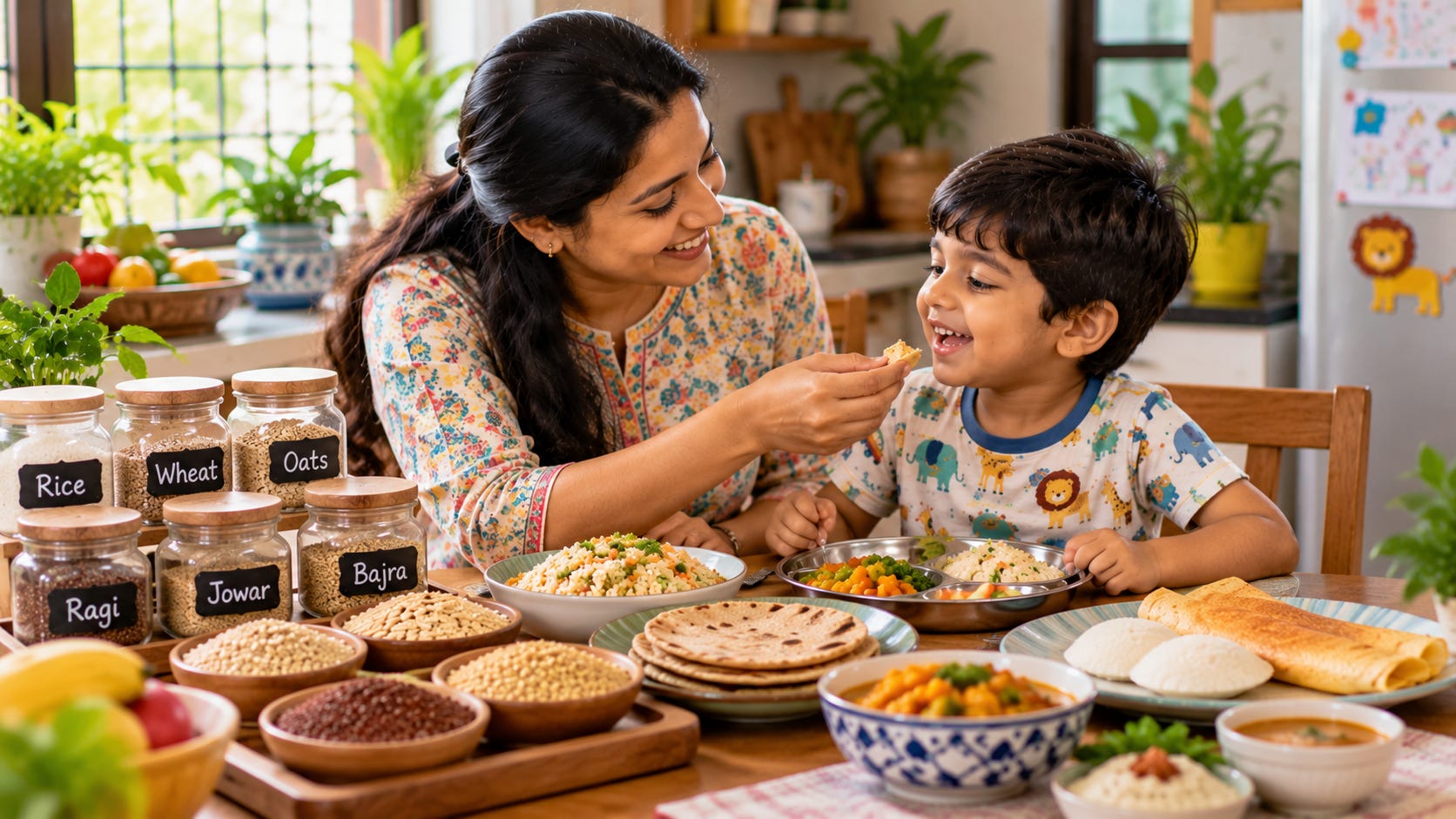
Rice, roti, dosa, idli and other grain-based foods are everyday staples in many Indian homes.
Children do not need to avoid grains.
Instead, families can include a variety of grains and millets as part of normal meals.
What does variety look like?
Depending on what your family usually eats, you might rotate:
Wheat.
Rice.
Oats.
Ragi.
Jowar.
Bajra.
Other locally available millets and grains.
There is no need to replace every familiar food overnight.
Make changes gradually
If your child strongly prefers white rice or regular chapati, you can simply introduce other options occasionally.
Try:
Ragi dosa.
Oats in a familiar preparation.
Millet roti.
Mixed-grain dishes.
Children often need repeated exposure before accepting new tastes and textures.
Look at the whole meal
A grain does not need to carry the entire nutritional responsibility of the meal.
Combine it with foods such as:
Dal or pulses.
Vegetables.
Curd.
Paneer, egg or another family protein source.
Fruit during the day.
India’s dietary guidelines encourage variety across cereals, millets, pulses, vegetables, fruits and other food groups.
💚 Earlyhood Parent Tip
Don’t search for the “best grain.”
A varied diet is usually more useful than depending on one fashionable ingredient every day.
Source: ICMR–National Institute of Nutrition – Dietary Guidelines for Indians