


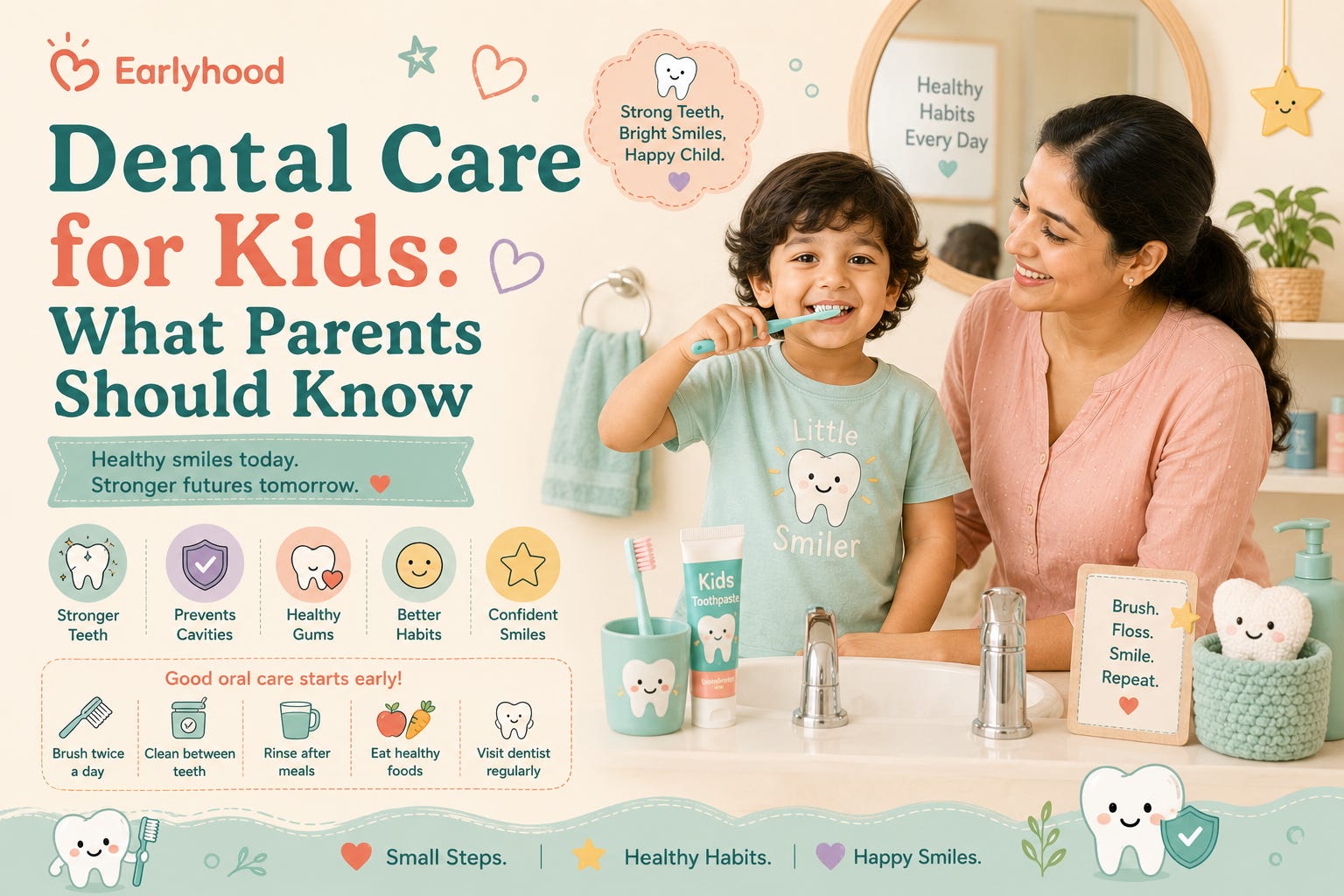
Many parents think dental care becomes important only when permanent teeth come in.
But milk teeth matter too.
Milk teeth help children chew food, speak clearly, smile confidently, and hold space for permanent teeth. If cavities begin early, children may face pain, eating difficulty, disturbed sleep, school absence, and fear of dental visits.
The good news is that many dental problems can be reduced with simple daily habits. Brushing, the right toothpaste amount, fewer sugary snacks, water after meals, and regular dental check-ups can make a big difference.
When Should Dental Care Start?
Dental care should begin when the first tooth appears.
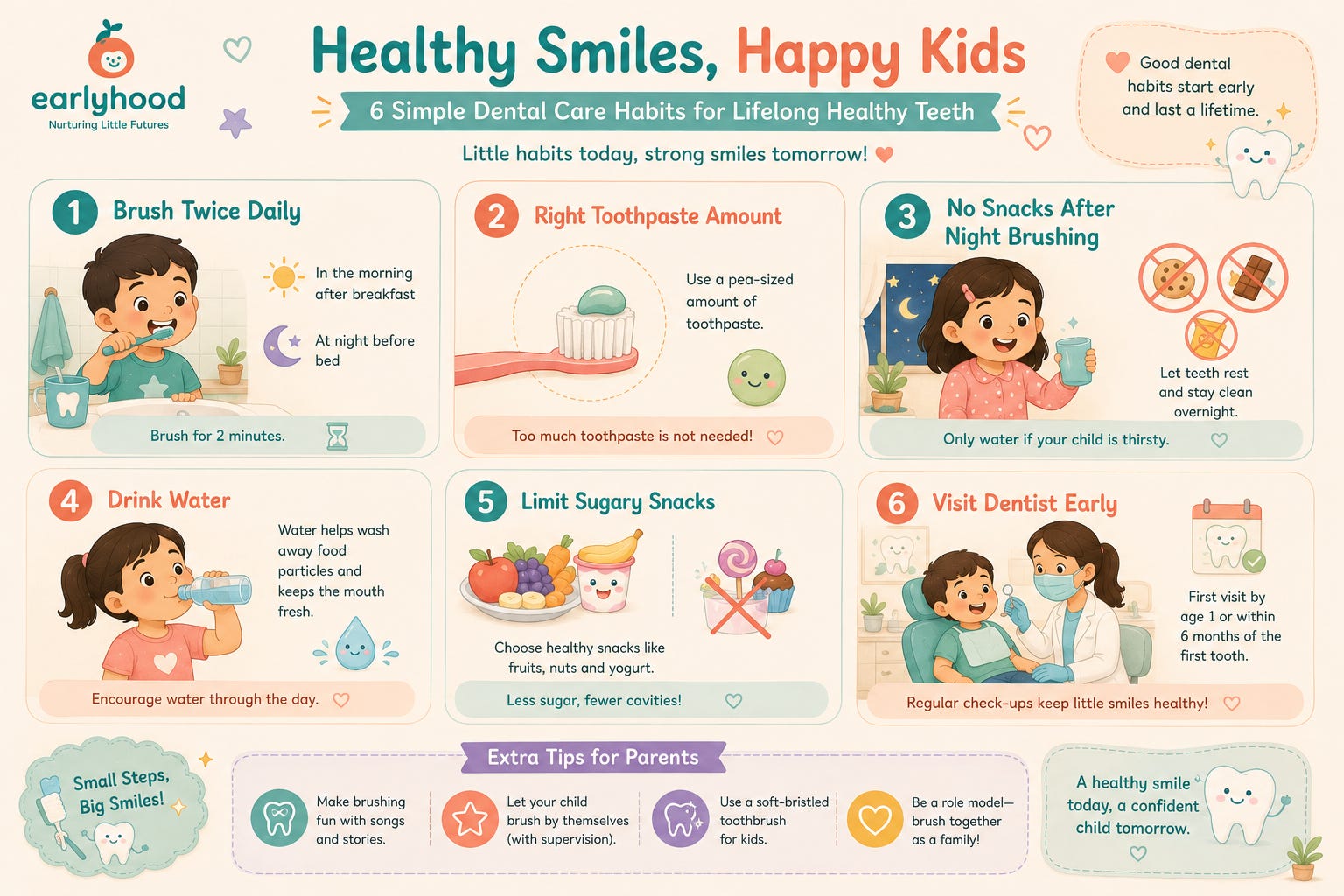
Parents can gently clean baby teeth with a soft, age-appropriate toothbrush. The American Academy of Pediatrics recommends using a very small smear, about rice-grain size, of fluoride toothpaste twice daily from the first tooth until age 3; after age 3, a pea-sized amount can be used.
For young children, parents should help with brushing. Most children cannot brush properly on their own in the early years, even if they want to do it independently.
Let your child try first, then you can “finish the brushing” gently.
When Should a Child First Visit a Dentist?
A child’s first dental visit should not wait until there is pain.
The American Academy of Pediatric Dentistry recommends the first dental visit when the first tooth appears, or no later than the child’s first birthday.
This early visit helps parents understand brushing, toothpaste, feeding habits, cavity prevention, and what to expect as teeth grow. It also helps the child become familiar with the dentist before any emergency or pain.
For older children who have never visited a dentist, parents can start now. Keep the first visit calm and positive.
Why Cavities Happen in Children
Cavities happen when bacteria in the mouth create acids that attack the teeth. Sugary foods and drinks can increase this risk, especially when they stay around the teeth for long periods. The CDC describes cavities as one of the most common diseases people experience, and notes that children who brush daily with fluoride toothpaste have fewer cavities.
Common reasons for cavities in young children include:
Frequent sugary snacks
Sleeping with milk bottle
Sticky sweets
Juice or sweet drinks often
Poor brushing
Not brushing before bed
Food stuck between teeth
Delayed dental visits
Even healthy-looking milk teeth need daily care.
Brushing Habits That Help
Children should brush twice a day with fluoride toothpaste. The CDC recommends brushing children’s teeth twice daily with fluoride toothpaste, and also highlights fluoride varnish and fluoridated water as cavity-prevention supports.
The most important brushing time is before sleep.
After night brushing, avoid milk, biscuits, juice, sweets, or snacks. If the child is thirsty, offer water.
Make brushing simple:
Use a soft child-size toothbrush
Use age-appropriate toothpaste quantity
Brush gently in small circles
Brush front, back, and chewing surfaces
Help the child spit
Do not make brushing a punishment
Replace toothbrush regularly
For younger children, make it playful. Use a brushing song, mirror, timer, or “toothbrush story.”
Food Habits and Teeth
Dental health is not only about brushing. Food routines also matter.
Try to reduce frequent snacking on sweets, chocolates, biscuits, sticky candies, sugary drinks, and packaged juices. Occasional treats are okay, but constant grazing can increase risk because teeth are exposed to sugar again and again.
Better snack options include:
Fruit pieces
Curd
Cheese
Boiled egg
Vegetable sticks
Homemade chilla
Idli
Dosa
Nuts or seeds only if age-safe
Water instead of sweet drinks
For small children, whole fruits are better than juice because they involve chewing and usually have less concentrated sugar.
How to Handle Dental Fear
Many children feel scared before a dental visit.
Parents can help by avoiding scary words like “pain,” “injection,” “drill,” or “doctor will remove your tooth if you don’t brush.”
Instead, say:
“The dentist will count your teeth.”
“They will check your smile.”
“We will learn how to keep teeth strong.”
“I will be with you.”
“It is a visit to help your teeth.”
Read a dentist-themed story, role-play at home, or let the child carry a soft toy. Keep the tone calm.
A child’s first dental experience should feel safe, not threatening.
Common Mistakes Parents Make
Parents often make these mistakes without realising:
Waiting for tooth pain before visiting a dentist
Thinking milk teeth are not important
Letting children sleep after milk without brushing
Using too much toothpaste
Allowing frequent sugary snacks
Giving juice often
Not helping with brushing
Using dental visits as a threat
Ignoring white or brown spots on teeth
If you notice tooth pain, swelling, bad breath, black spots, white patches, bleeding gums, or difficulty chewing, speak to a dentist.
Earlyhood Tip
Create a simple family rule:
Brush twice daily. No snacks after night brushing. Dentist visits before pain starts.
This one routine can protect many children from avoidable dental problems.
Also remember: children copy adults. If they see parents brushing calmly every morning and night, they are more likely to accept the habit.
Final Thought
Dental care does not need to be complicated.
Start early. Brush gently. Use the right amount of toothpaste. Reduce frequent sugar. Keep bedtime clean. Visit the dentist before problems become serious.
Milk teeth may be temporary, but the habits built around them can last for life.
Healthy smiles begin with small daily routines.
Join the Earlyhood Parent Community for trusted guidance on learning, parenting, health, preschool, activities, and storytime for children aged 0–8.