


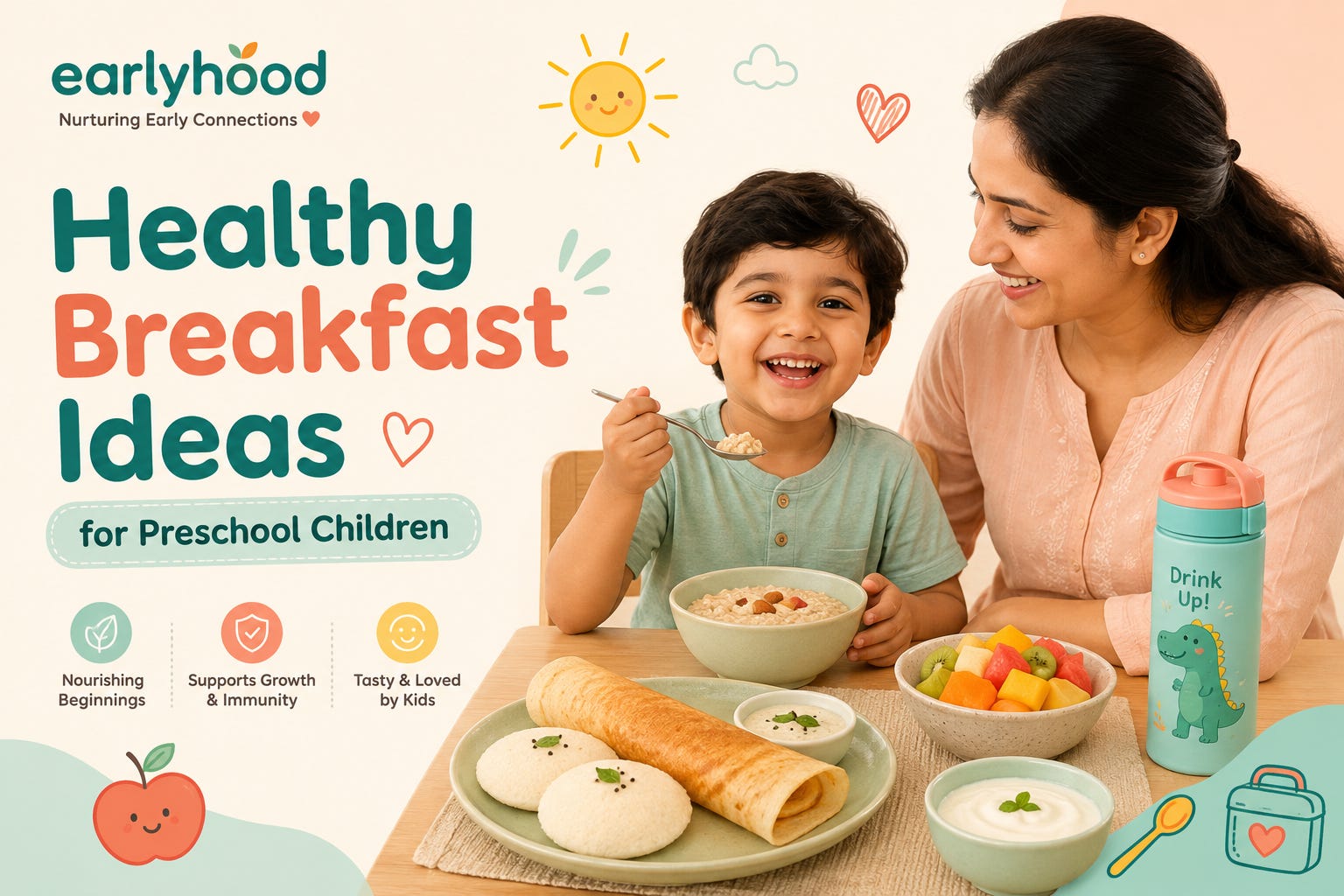
Breakfast can feel like a daily challenge for many parents.
Some children wake up hungry. Some refuse everything. Some want only milk, biscuits, chocolate spread, or packaged snacks. Some take too long to eat before school. And on busy mornings, parents often choose whatever is fastest.
But for preschool children, breakfast is more than just the first meal of the day. It helps set the tone for energy, mood, attention, and routine.
A good breakfast does not need to be fancy. It does not need to be expensive. It simply needs to be balanced, practical, and child-friendly.
Health experts commonly recommend offering children a variety of foods across food groups such as fruits, vegetables, protein foods, dairy without added sugars, healthy fats, and whole grains.
What Makes a Good Preschool Breakfast?
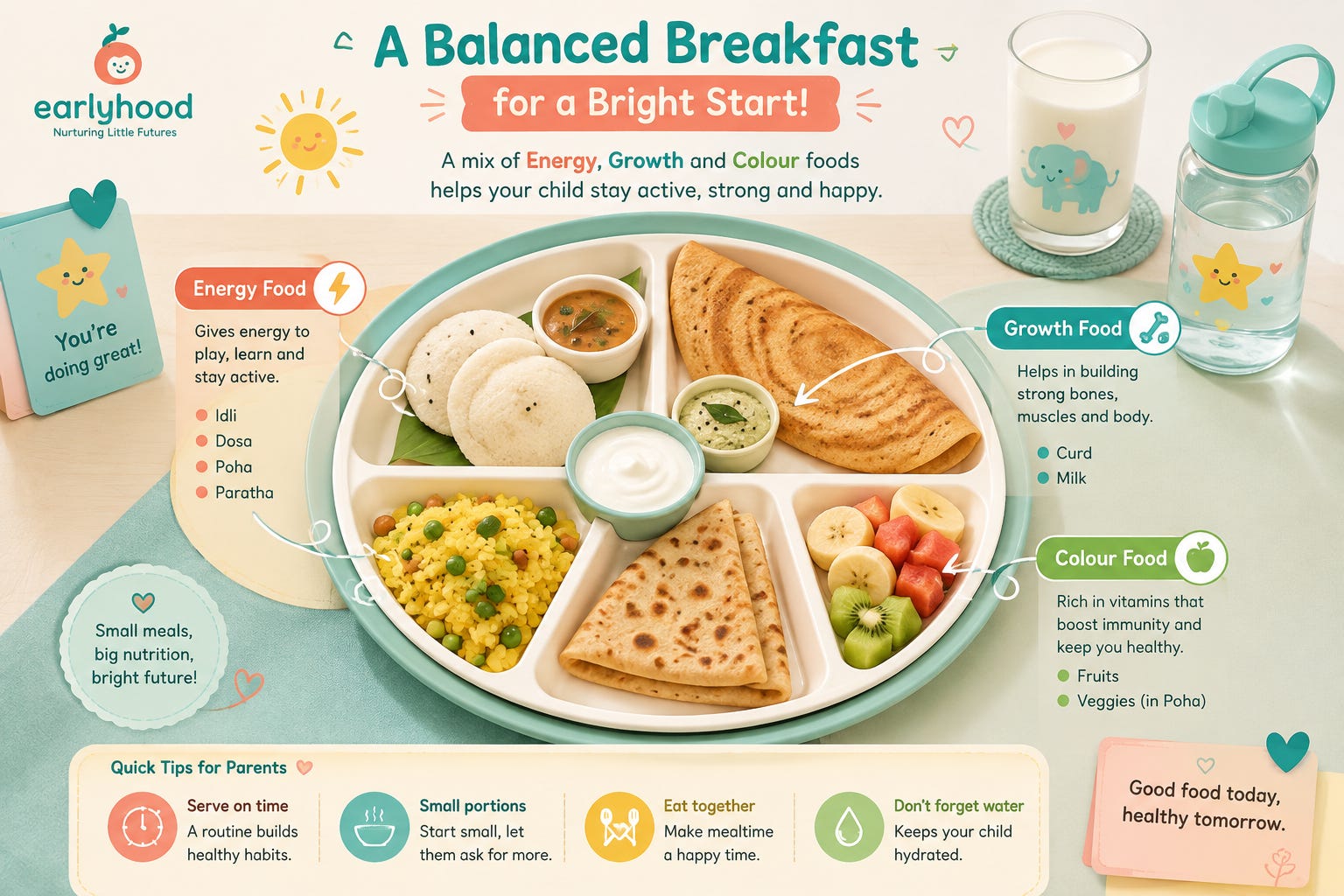
A healthy breakfast for young children should ideally include three things:
1. Energy food
This can come from foods like idli, dosa, Poha, upma, oats, chapati, paratha, whole wheat bread, or millet-based dishes.
2. Growth food
This includes protein-rich foods like egg, paneer, curd, dal, sprouts, Chana, peanut chutney, nut paste, or milk-based options.
3. Colour food
This means fruits or vegetables like banana, apple, papaya, carrot, cucumber, tomato, peas, beetroot, or seasonal fruits.
You don’t need all food groups perfectly in every meal. But over the week, try to bring variety.
1. Idli With Sambar or Chutney
Idli is soft, easy to eat, and familiar for many Indian children. When paired with sambar, it becomes more filling because sambar includes dal and vegetables.
For younger children, keep the sambar mild and slightly thick. You can mash the idli into small pieces and add a little ghee if needed.
Earlyhood idea:
Add carrot, pumpkin, or beetroot puree to the batter sometimes for colour and variety.
2. Dosa With Protein Chutney
Dosa is a favourite breakfast in many homes. To make it more balanced, pair it with peanut chutney, dal chutney, curd, paneer stuffing, or mild sambar.
Plain dosa alone may not keep a child full for long. Adding protein or curd makes it more complete.
Parent tip:
Cut dosa into small strips or roll it like a wrap. Children often eat better when food looks easy to hold.
3. Vegetable Poha
Poha is quick, soft, and easy to customize.
Add peas, carrot, potato, onion, coriander, peanuts if age-appropriate, and a squeeze of lemon. For small children, keep peanuts crushed or avoid them if there is any choking concern.
Poha works well for children who do not like heavy breakfast but still need something warm and filling.
4. Upma With Vegetables
Upma can become a good preschool breakfast when made soft and Colourful.
Add vegetables like carrot, beans, peas, capsicum, tomato, or beetroot. You can also add a little curd on the side.
The texture matters. Many children reject upma when it is too dry. Keep it soft and mildly flavored.
5. Egg or Paneer Roll
For children who prefer hand-held food, a simple roll works well.
Use a soft chapati and fill it with scrambled egg, paneer Bhurji, or mashed dal and vegetables. Keep the filling mild and easy to chew.
This is also useful for rushed mornings because it can be packed and eaten slowly.
6. Oats With Fruit
Oats can be made sweet or savory.
For a sweet version, cook oats with milk and add banana, apple, dates paste, or a little nut powder. Avoid making it too sugary.
For a savory version, cook oats like upma with vegetables.
The CDC recommends prioritizing fiber-rich whole grains as part of healthier meals and snacks, and oats can fit well into that idea when prepared simply.
7. Curd Rice or Curd Bowl
Some children prefer cool and soft foods in the morning.
Curd rice with grated carrot, cucumber, or mild seasoning can be soothing and easy to eat. You can also make a curd bowl with fruit, soft poha, or cooked millet.
Use plain curd rather than sweetened packaged yogurt. Health guidance generally recommends dairy foods without added sugars.
8. Stuffed Paratha With Curd
Aloo, paneer, carrot, Methi, or dal paratha can work well when made soft and not too oily.
Serve with curd instead of pickle for younger children. Cut it into triangles or small squares.
For preschool mornings, keep the portion small. A child may eat one small paratha happily, but reject a large plate.
9. Fruit + Main Breakfast Combo
Fruit alone may not be enough for many children, but fruit with breakfast is a good habit.
Easy combinations:
Banana + dosa
Apple slices + curd
Papaya + poha
Chiku + oats
Orange + idli
Watermelon + paratha
Offering fruits in their original form is encouraged as part of healthy eating patterns for children.
What Parents Should Avoid Daily
Occasional treats are okay, but try not to make these daily breakfast habits:
Only biscuits with milk
Sugary cereals
Packaged cakes
Chocolate spread every day
Deep-fried snacks daily
Too much juice instead of whole fruit
Breakfast skipped because the child is late
These foods may be convenient, but they may not give children steady energy for preschool and play.
Simple Weekly Breakfast Plan
Monday: Idli + sambar
Tuesday: Vegetable poha + fruit
Wednesday: Dosa + peanut/dal chutney
Thursday: Oats with banana
Friday: Paneer or egg roll
Saturday: Stuffed paratha + curd
Sunday: Family breakfast with dosa, upma, or homemade pancakes
Keep the plan flexible. The goal is not perfection. The goal is routine and variety.
Earlyhood Tip
Do not fight every morning over food.
Serve small portions. Keep choices limited. Make the plate Colourful. Avoid screens during breakfast. And when possible, eat together as a family.
Children build food habits slowly by watching adults, repeating routines, and feeling calm around food. UNICEF also highlights that teaching healthy eating from a young age supports a positive relationship with food.
Final Thought
A healthy preschool breakfast does not need to be complicated.
It can be as simple as idli with sambar, dosa with chutney, poha with vegetables, oats with banana, or paratha with curd.
What matters most is balance, variety, and consistency.
Start small. Add one better habit at a time. Over weeks and months, these small breakfast choices can help children build healthier mornings and better food routines.
Join the Earlyhood Parent Community for trusted guidance on learning, parenting, health, preschool, activities, and Storytime for children aged 0–8.