


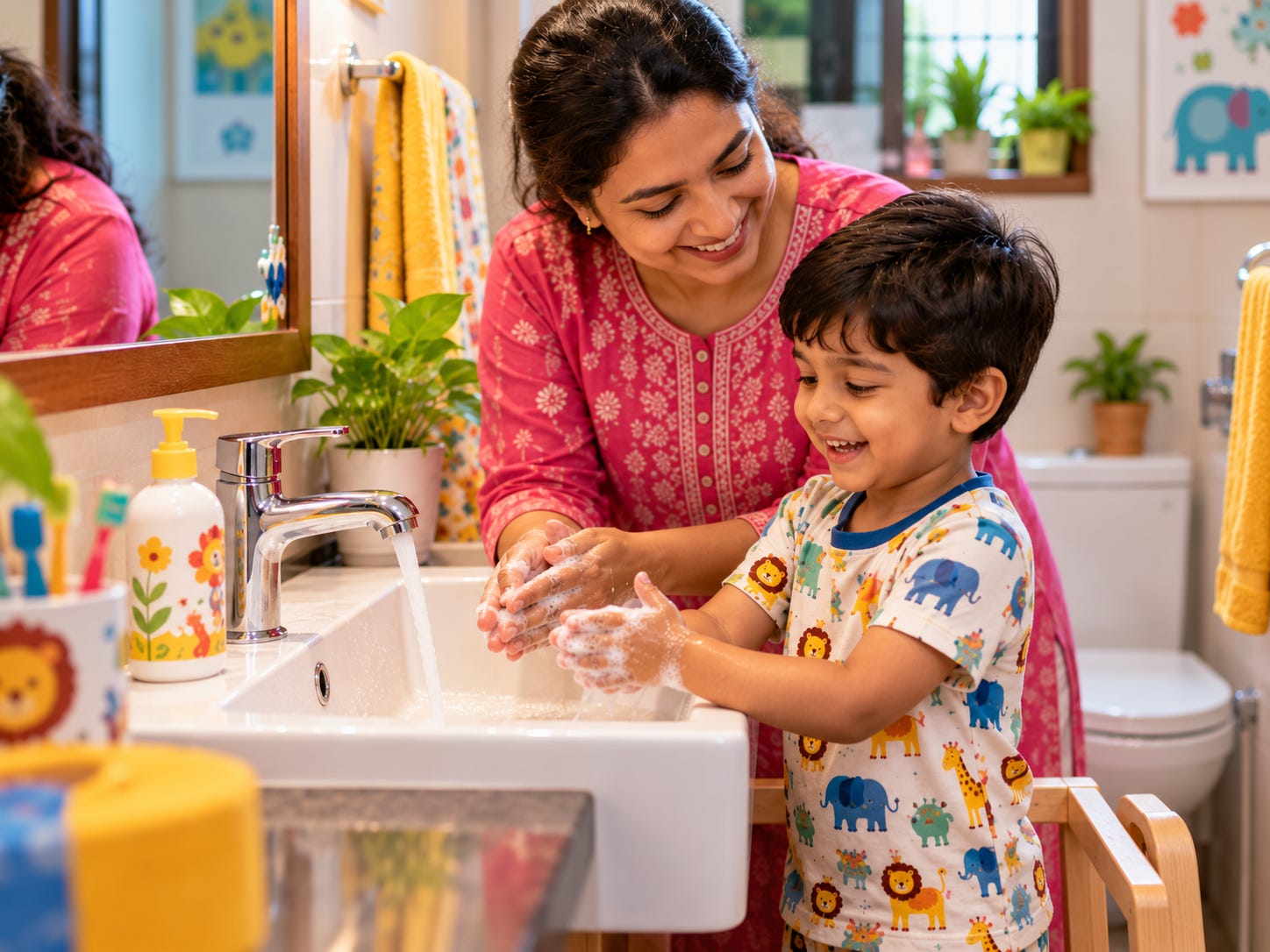
“Wash your hands!”
Parents may repeat this sentence many times every day.
The easiest long-term solution is to connect handwashing with routines children already understand.
Pick the important moments
Teach children to wash their hands:
Before eating.
After using the toilet.
After outdoor play.
After blowing their nose, coughing or sneezing.
When hands are visibly dirty.
Teach the steps simply
Use clean running water and soap.
Help your child rub the fronts and backs of the hands, between fingers and around fingertips before rinsing and drying.
Younger children will need supervision.
Make the environment easy
A safe step stool can help children reach the sink independently.
Keep soap accessible.
You can also use a short song while washing to stop the routine from feeling rushed.
Model it yourself
Children notice adults.
If parents wash before cooking or eating, the behaviour feels like a normal family habit rather than another child-only rule.
Avoid making children frightened of germs.
The goal is sensible hygiene—not constant worry about touching things.
💚 Earlyhood Parent Tip
Connect handwashing to a predictable event:
Come home → shoes off → wash hands.
Habits become easier when children don’t have to decide when to do them.