


Sleep is one of the most important parts of a child’s health, but it is also one of the most common struggles for parents.
Some children sleep late. Some wake up too early. Some need a parent beside them every night. Some resist bedtime, ask for water again and again, or suddenly become active just when the house is ready to sleep.
For preschool children, sleep is not just rest. It supports growth, brain development, memory, emotional balance, attention, and everyday behaviour.
A child who is not sleeping well may look cranky, hyperactive, tearful, clingy, distracted, or difficult to settle. Many times, what looks like “bad behaviour” may simply be tiredness.
How Much Sleep Is Needed?
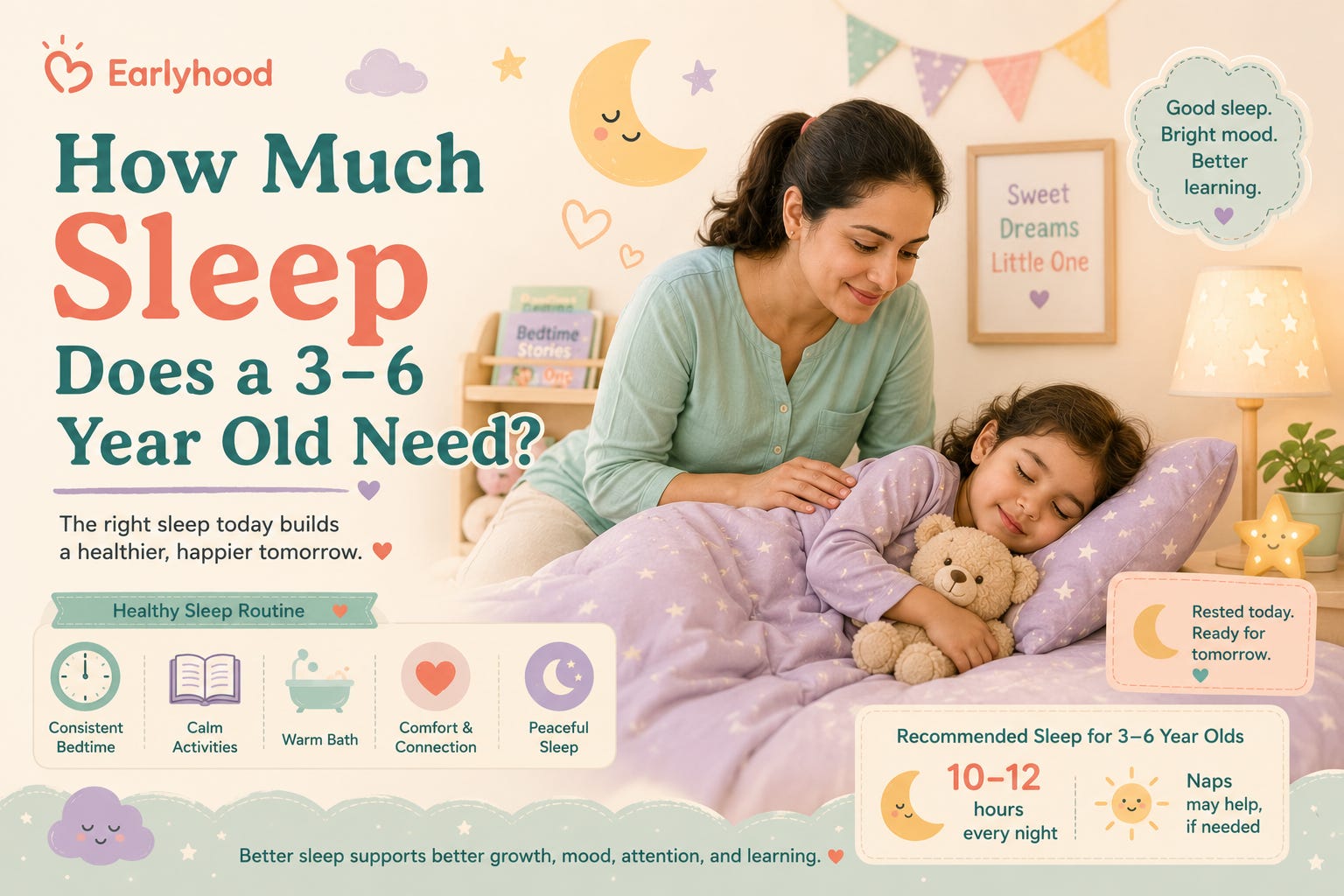
For children aged 3–5 years, the American Academy of Sleep Medicine recommends 10–13 hours of sleep per 24 hours, including naps. The CDC also shares the same 10–13 hour recommendation for preschoolers aged 3–5 years.
For a 6-year-old, sleep needs are usually closer to the school-age range. AASM recommends 9–12 hours per 24 hours for children aged 6–12 years.
So for Earlyhood parents, a simple guide is:
3–5 years: 10–13 hours in 24 hours
6 years: around 9–12 hours in 24 hours
This includes night sleep and naps if the child still naps.
Every child is different. Some children naturally need slightly more sleep, while others function well with slightly less. The key is to observe your child’s mood, energy, attention, and ability to wake up comfortably.
Why Sleep Matters in Early Childhood
Sleep affects the whole child.
When children sleep well, they are more likely to wake up fresh, eat better, focus better, play better, and handle emotions better.
Good sleep supports:
Emotional regulation
Memory and learning
Growth and recovery
Attention and focus
Immunity and health
Better morning routines
Calmer preschool adjustment
Sleep also helps children process what they learned during the day. A child who played, listened to stories, learned new words, explored activities, and interacted with others needs sleep to recover and organise those experiences.
Signs Your Child May Need More Sleep
A child may not always say, “I am tired.”
Instead, tiredness may show through behaviour.
Watch for signs like:
Frequent crankiness
Crying over small things
Hyperactivity at night
Difficulty waking up
Falling asleep in the car often
Low attention during activities
More tantrums in the evening
Clinginess or irritability
Sleeping very late but waking early
Needing screens to fall asleep
Some children become more active when they are overtired. Parents may think, “My child is not sleepy at all,” but actually the child has crossed the tiredness point.
What Is a Good Bedtime?
There is no perfect bedtime for every family, but preschool children usually do better with a predictable and not-too-late bedtime.
If your child has to wake up at 7:00 AM, and needs around 10–12 hours of sleep, bedtime may need to be around 8:00–9:00 PM depending on naps.
If bedtime becomes 10:30 or 11:00 PM regularly, many children may not get enough sleep, especially on school days.
The goal is not to force a strict schedule suddenly. Start by slowly moving bedtime earlier by 10–15 minutes every few days.
Create a Calm Bedtime Routine
Children sleep better when bedtime feels predictable.
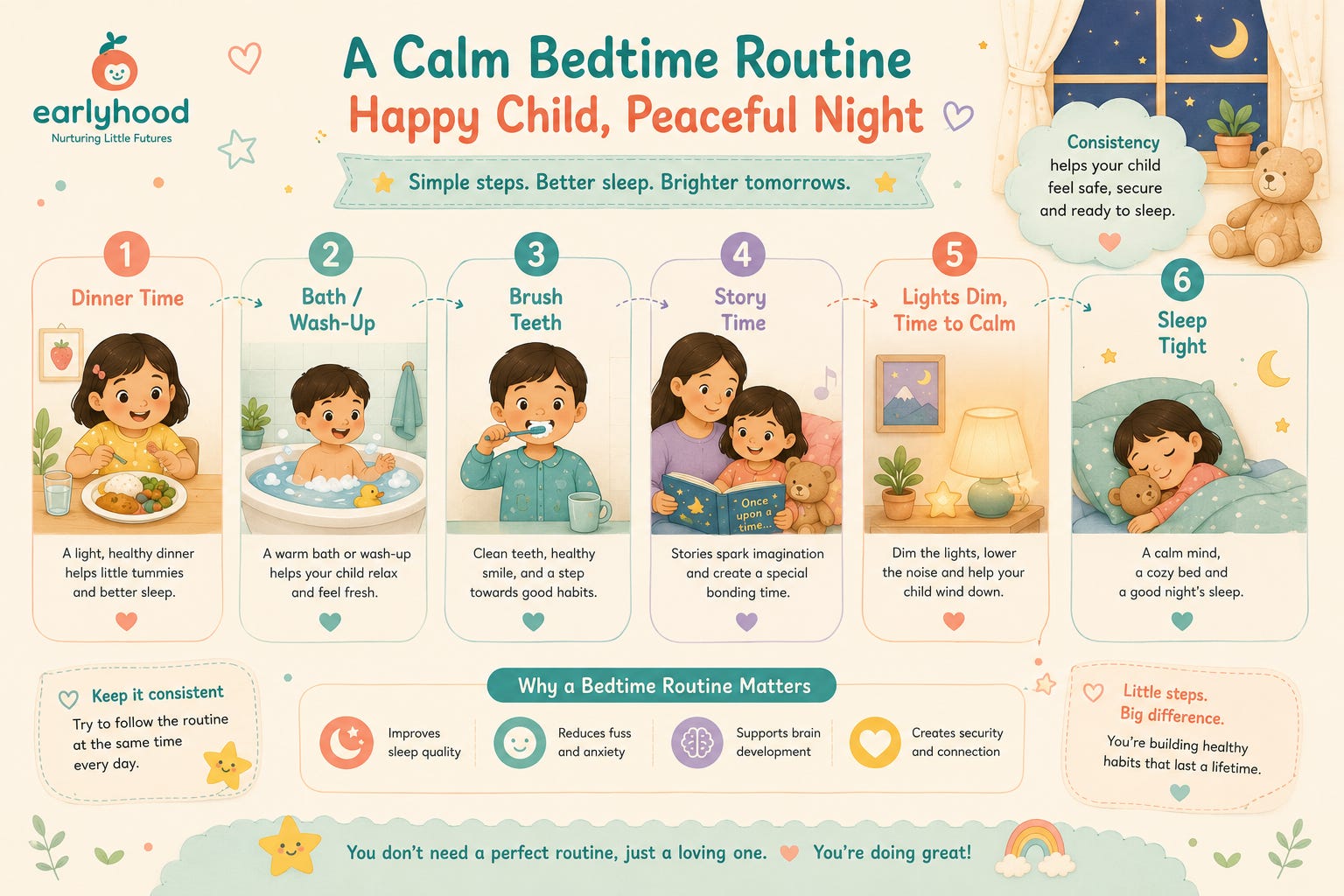
A simple routine can look like:
Dinner
Quiet play
Bath or wash-up
Brush teeth
Change clothes
Storytime
Lights dim
Goodnight phrase
Keep the routine short and repeatable. Children feel safer when they know what comes next.
Avoid turning bedtime into a long negotiation. If every night has extra snacks, extra screen time, five stories, and many delays, bedtime becomes confusing.
A calm routine teaches the child: “The day is ending. My body can rest now.”
Reduce Screens Before Sleep
Screens can make bedtime harder for many children.
Fast videos, bright light, games, and exciting content can keep the brain alert when it should be slowing down. Try to keep the last part of the evening screen-free or at least low-stimulation.
Instead of screens, use:
Picture books
Soft music
Simple storytelling
Quiet drawing
Puzzles
Cuddles
Deep breathing
A soft toy bedtime ritual
A small change in the last 30–60 minutes before bed can make a big difference over time.
What About Naps?
Many 3-year-olds still need naps. Some 4-year-olds nap occasionally. Some 5-year-olds stop napping but may need quiet time.
If your child naps too late in the evening, bedtime may shift later. If your child skips naps but becomes very cranky by evening, they may still need rest.
Quiet time can also help.
Even if the child does not sleep, they can lie down, look at books, listen to a calm story, or rest with soft toys.
The goal is not always sleep. Sometimes the goal is recovery.
When Should Parents Seek Help?
Some sleep struggles are common, but parents should speak to a pediatrician if they notice:
Very loud snoring
Breathing pauses during sleep
Extreme daytime sleepiness
Frequent night terrors or distress
Sleep problems affecting daily life strongly
Ongoing difficulty falling or staying asleep
Major behaviour changes linked to poor sleep
Ongoing sleep concerns should be discussed with a pediatrician or qualified specialist, especially when they affect the child’s daily functioning.
Earlyhood Tip
Think of sleep as a daily health habit, not just a night-time issue.
A calmer day often leads to a calmer night.
Outdoor play, predictable routines, limited late-evening screens, early dinner, and a simple bedtime ritual can all support better sleep.
Start with one change.
Maybe tonight it is one bedtime story instead of a screen.
Maybe this week it is moving bedtime 15 minutes earlier.
Maybe this month it is building a fixed sleep routine.
Small changes repeated daily become habits.
Final Thought
Sleep is not only about making children lie down.
It is about helping their body and mind feel safe enough to rest.
A well-rested child is often more cheerful, focused, curious, and emotionally balanced. And a predictable sleep routine can make family life calmer too.
Your child does not need a perfect bedtime routine from day one.
Start gently. Stay consistent. Keep evenings calmer.
Because healthy sleep is one of the strongest foundations for healthy childhood.
Join the Earlyhood Parent Community for trusted guidance on learning, parenting, health, preschool, activities, and storytime for children aged 0–8.