


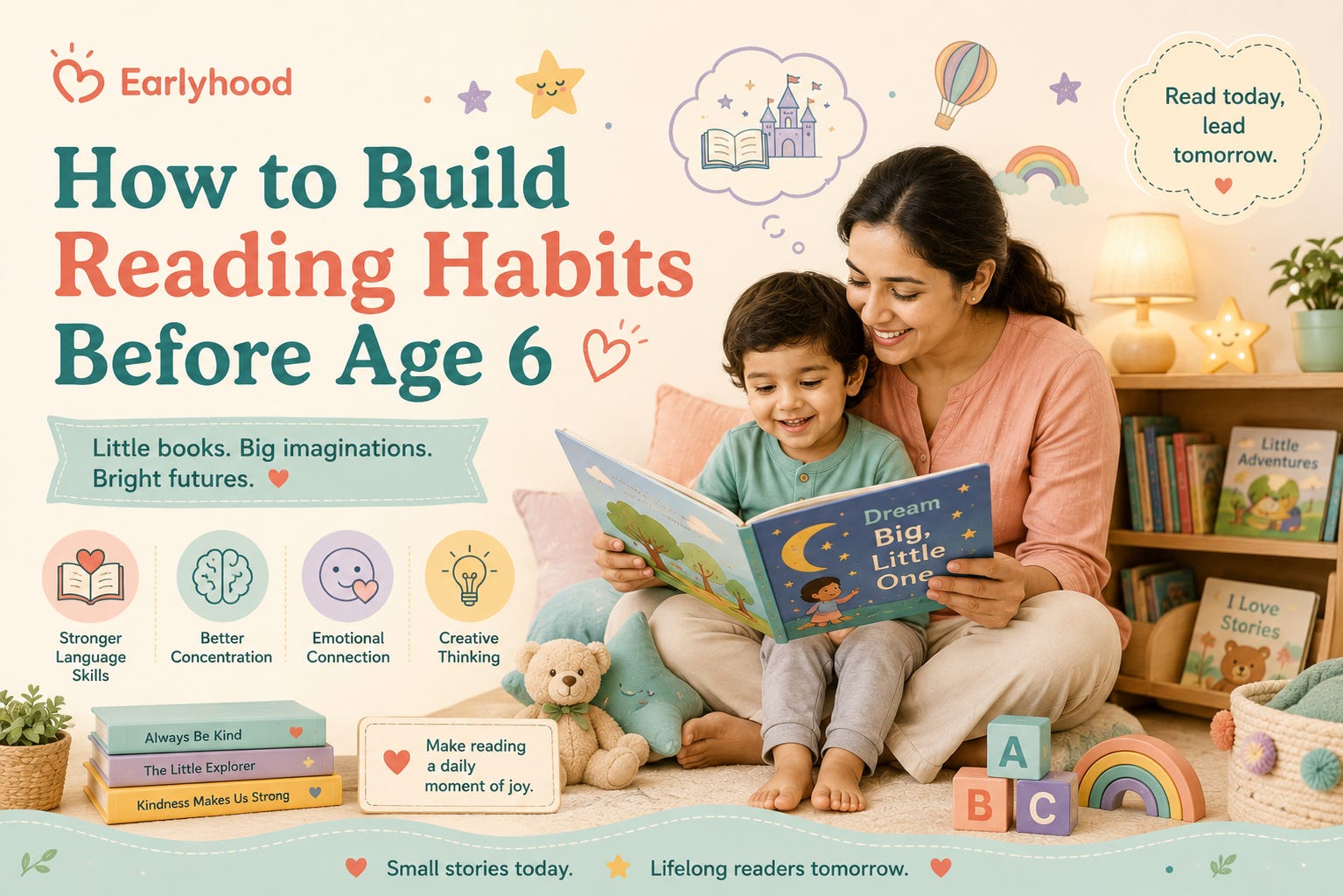
Reading does not begin when a child starts reading words.
It begins much earlier.
It begins when a baby listens to a parent’s voice. It begins when a toddler points at pictures. It begins when a preschooler asks for the same story again and again. It begins when a child holds a book, turns pages, names animals, guesses what happens next, and connects stories with real life.
Many parents feel pressure to make children read early. But before age 6, the goal is not to force reading. The goal is to build love for books, language, imagination, listening, and curiosity.
A child who enjoys books will slowly become more ready for reading.
Start With Picture Books
For young children, pictures are powerful.
Before children understand letters, they understand faces, animals, colours, objects, and actions. A picture book helps them observe, ask questions, and connect words with images.
You do not always need to read every sentence exactly. You can simply point and talk.
Say:
“What do you see here?”
“Where is the cat?”
“What colour is the ball?”
“How is the child feeling?”
“What do you think will happen next?”
This kind of conversation builds vocabulary, attention, memory, and imagination.
For children aged 0–3, choose books with bright pictures, simple words, animals, daily routines, family, food, bedtime, vehicles, and emotions.
For children aged 3–6, choose stories with simple plots, repeated lines, friendship, kindness, school, nature, festivals, and problem-solving.
Make Reading a Daily Ritual
Reading habits grow through routine.
You do not need one hour every day. Even 10 minutes can make a difference if it happens regularly.
Choose one fixed time:
Before bedtime
After lunch
After preschool
During quiet time
Before afternoon nap
On Sunday morning
When reading becomes part of the daily rhythm, children begin to expect it naturally.
A bedtime story is especially powerful because it creates calm bonding after a busy day. The child feels close, safe, and emotionally connected.
The goal is not to finish many books. The goal is to create a warm reading memory.
Let the Child Choose Books
Children feel more interested when they get some choice.
Keep 5–6 books in a small basket where the child can reach them. Ask:
“Which book shall we read today?”
Sometimes, children will choose the same book for many days. That is okay. Repetition helps young children understand language, remember words, predict patterns, and feel confident.
Adults may get bored of the same story, but children often feel secure through repetition.
If your child says the story before you do, that is a good sign. It means they are listening, remembering, and connecting.
Read With Expression
Children love voice, emotion, and drama.
You can change your voice for different characters. Whisper when the story is quiet. Use a funny voice for animals. Pause before surprising moments. Make sound effects.
For example:
“The lion roared…”
“Tiptoe, tiptoe, tiptoe…”
“Oh no! The balloon flew away!”
This makes reading feel alive.
When stories become fun, children do not see books as study material. They see books as joy.
Connect Stories With Real Life
After reading, connect the story with your child’s world.
If the story has a garden, talk about the park you visited.
If the story has a lunchbox, talk about school snack time.
If the story has sharing, talk about sharing toys.
If the story has brushing, talk about morning routine.
You can say:
“Remember, the bunny also brushed his teeth like you.”
“The child in the story felt scared on the first day of school. Did you feel like that?”
“This story has a mango tree. Have we seen one?”
This helps children understand meaning, emotions, and values.
Create a Book-Friendly Home
A reading habit becomes easier when books are visible.
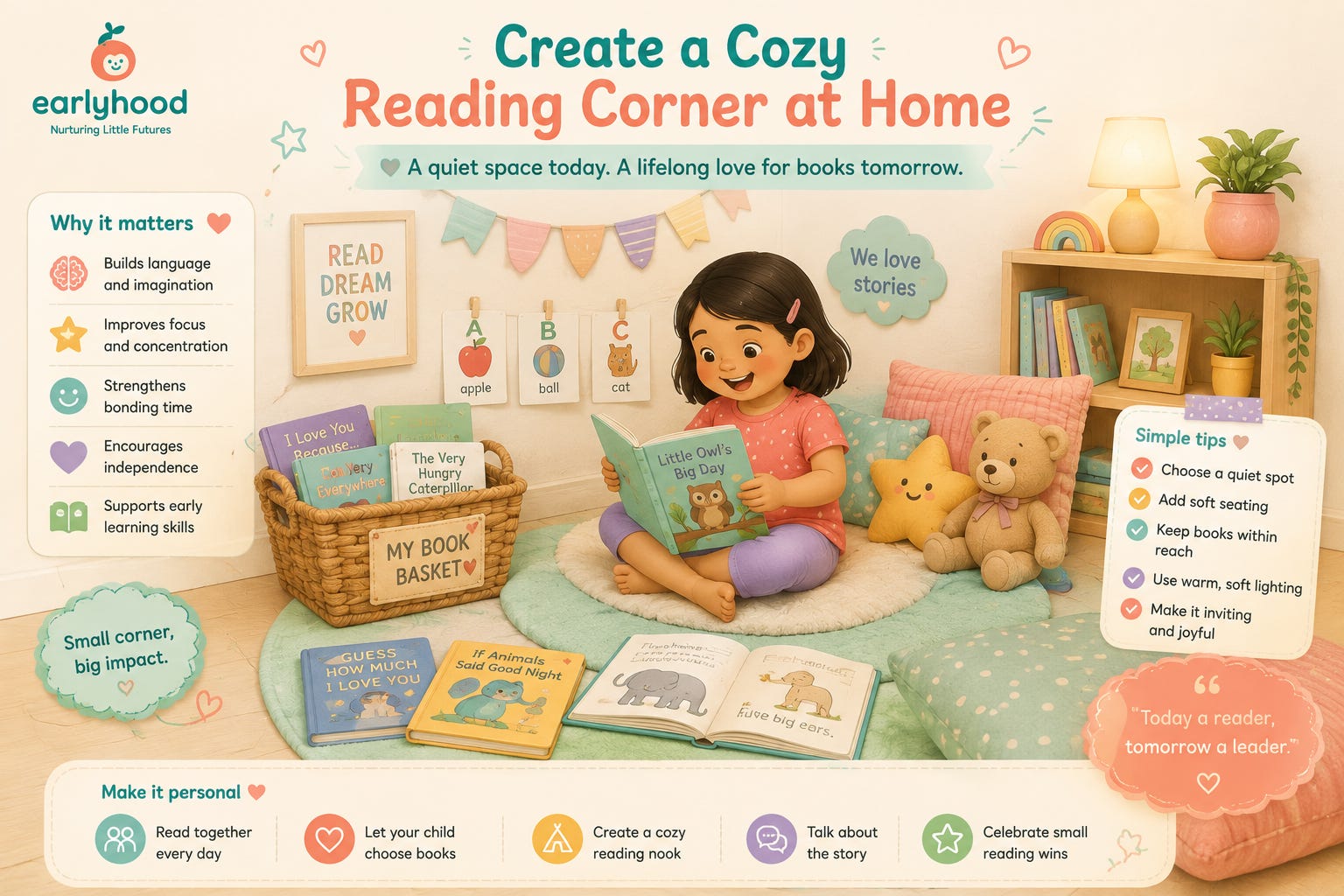
You do not need a big library. A small reading corner is enough.
Keep:
A floor mat
Small cushion
Book basket
Soft light
Few picture books
Story cards
Soft toy reading buddy
Let books be part of everyday life, not locked away for special occasions.
Also let your child see you reading sometimes. Children copy what adults do more than what adults say.
If they see parents reading books, magazines, newspapers, menus, or labels, they begin to understand that reading is useful and normal.
Avoid Turning Reading Into a Test
This is very important.
Do not ask too many questions like an exam.
Avoid constant pressure:
“What is this letter?”
“Read this word.”
“Why don’t you know this?”
“Say it properly.”
“You should read by now.”
These lines can make reading stressful.
Instead, keep reading playful and relaxed.
Ask open questions:
“What did you like?”
“Which character was funny?”
“What would you do?”
“Should we make a new ending?”
The more enjoyable reading feels, the stronger the habit becomes.
Use Stories Beyond Books
Reading habits are not only built through printed books.
You can use:
Bedtime stories
Family stories
Grandparent stories
Festival stories
Picture cards
Storytelling with toys
Story walks
Audio stories with parent discussion
Homemade storybooks
You can even make a story from daily life:
“Once there was a little child who wore red shoes and went to the park…”
Children love stories where they become the main character.
Earlyhood Tip
Before age 6, don’t rush your child to read perfectly.
First build:
Love for books
Listening skills
Vocabulary
Imagination
Attention
Story understanding
Comfort with language
Reading confidence grows naturally when children feel connected to stories.
Final Thought
A strong reading habit is not built by pressure.
It is built through small, warm, repeated moments.
A parent reading on the bed.
A child pointing at a picture.
A favourite story repeated many times.
A funny animal voice.
A question about what happens next.
A quiet hug after the last page.
These moments slowly teach children that books are safe, joyful, and meaningful.
Before children learn to read words, they learn to love stories.
And that love becomes the foundation for lifelong reading.
Join the Earlyhood Parent Community for trusted guidance on learning, parenting, health, preschool, activities, and storytime for children aged 0–8.