


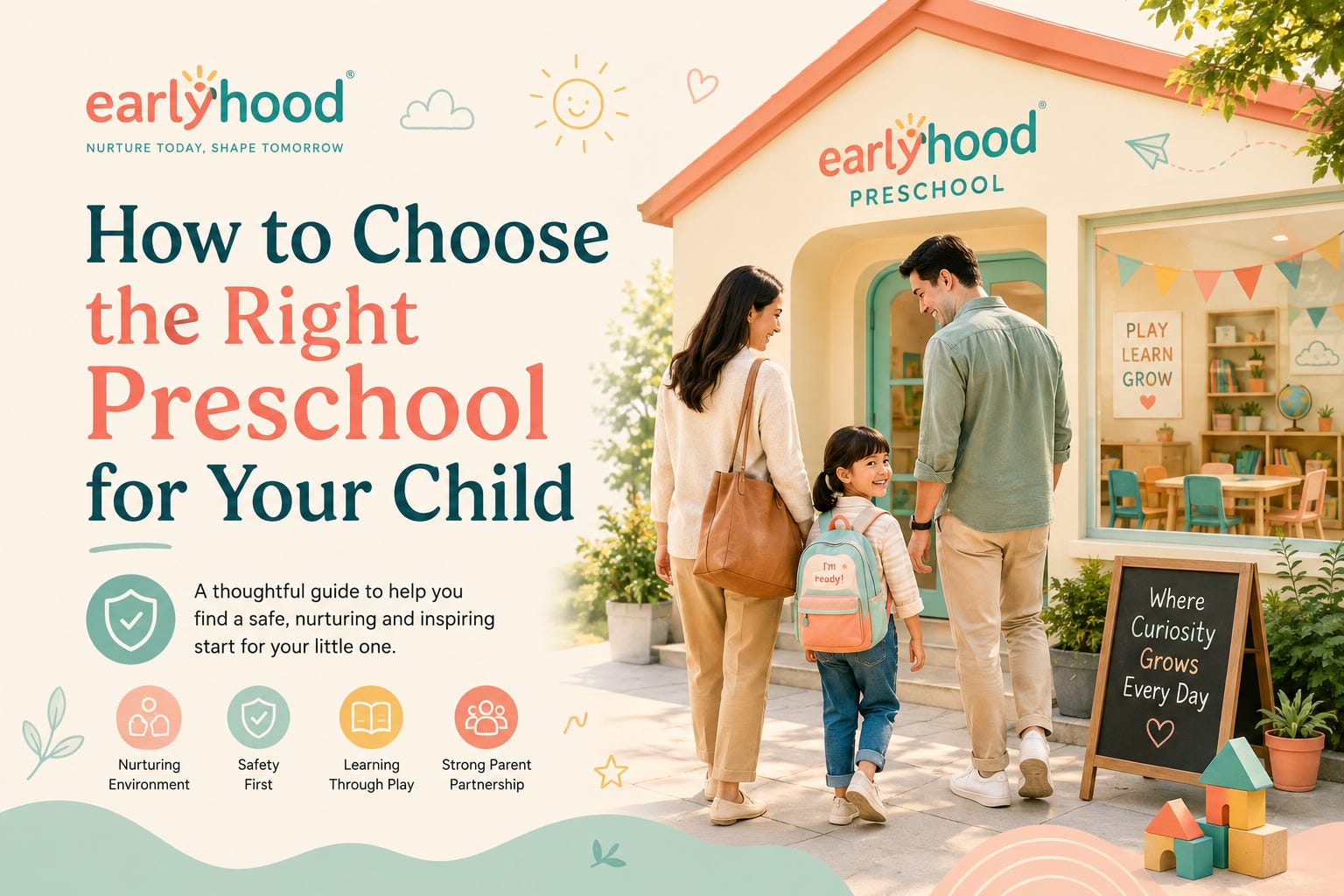
Choosing a preschool is one of the first big decisions parents make.
For many families, it is the child’s first step outside home into a new environment. Naturally, parents worry about many things: Is the school safe? Are the teachers caring? Will my child cry? Is the curriculum good? Is the fee worth it? Will my child learn enough?
These questions are important.
But the right preschool is not only about brand name, colourful classrooms, or fancy facilities. A good preschool should make your child feel safe, understood, and excited to explore.
In the early years, children learn best in an environment that offers care, play, routine, language, movement, stories, social interaction, and emotional comfort.
So before choosing a preschool, parents should look beyond brochures and admission offers. They should observe how the place feels, how teachers speak, how children are treated, and whether the school understands early childhood.
Start With Safety and Hygiene
Safety should always come first.
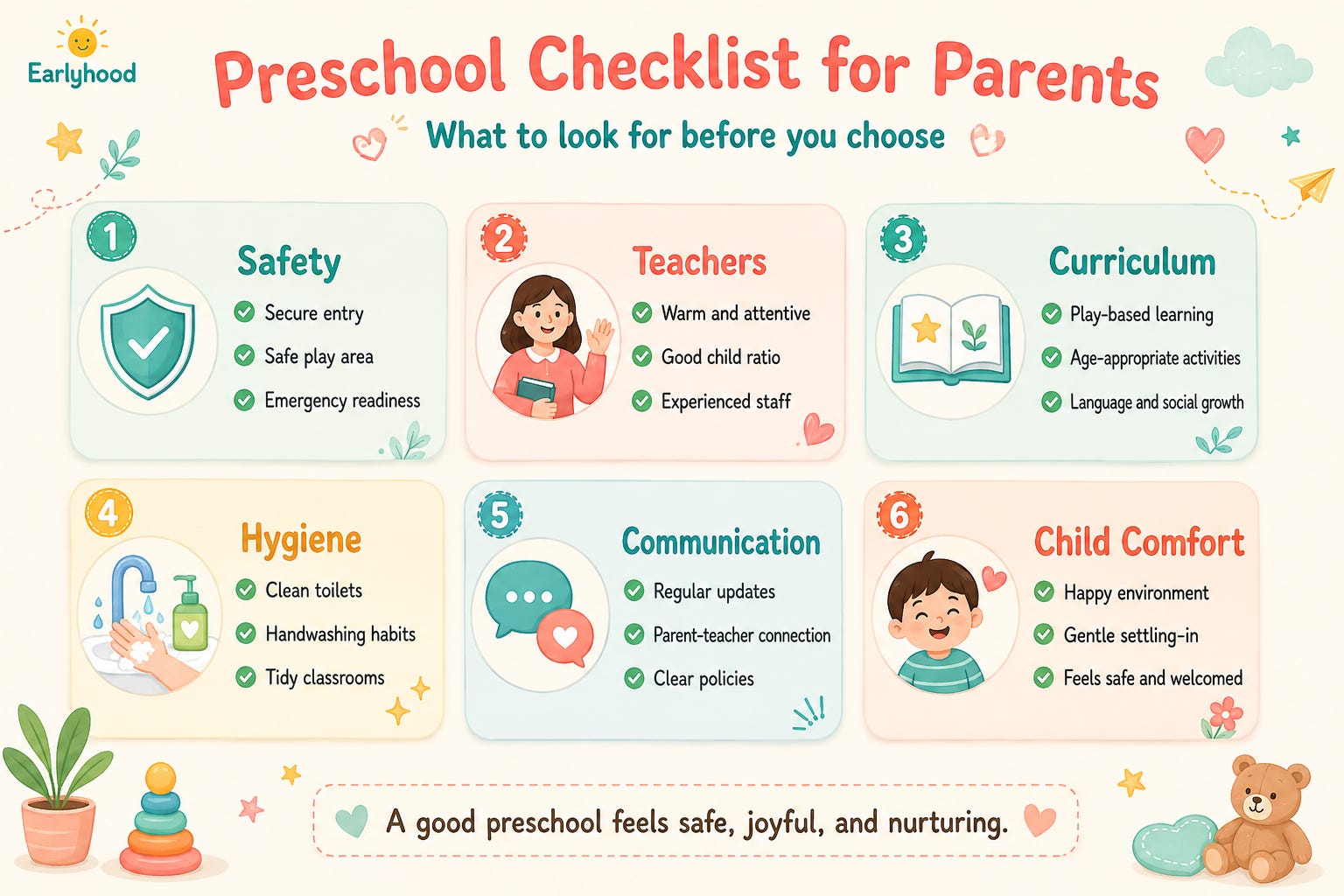
During your preschool visit, observe the entrance, classrooms, washrooms, play area, stairs, furniture, electrical points, and pick-up process.
Ask simple but important questions:
How is child pick-up managed?
Are visitors allowed inside freely?
Are classrooms child-safe?
Is there CCTV?
How are emergencies handled?
Are washrooms clean and child-friendly?
What happens if a child falls sick?
A preschool does not need to look luxurious, but it should look safe, clean, organised, and child-ready.
Also notice small things. Are floors clean? Are toys maintained? Are sharp corners covered? Are washrooms easy for children to use? Are staff members alert?
These details matter because young children need constant care and supervision.
Observe the Teachers
Teachers are the heart of a preschool.
A beautiful building cannot replace a warm teacher.
During your visit, observe how teachers speak to children. Are they patient? Do they bend down to the child’s level? Do they smile? Do they listen? Do they shout often? Do children look comfortable around them?
Young children need teachers who are calm, affectionate, and emotionally available.
Ask about teacher-child ratio. Smaller groups usually allow better attention, especially for younger children who need help with eating, washroom routines, settling, and emotional support.
Also ask how teachers handle crying, tantrums, separation anxiety, and conflicts between children. Their answer will tell you a lot about the school’s approach.
Understand the Curriculum
Many preschools use words like Montessori, playway, activity-based, experiential learning, or integrated curriculum.
Do not get confused by labels.
Instead, ask what children actually do during the day.
A good preschool routine should include:
Free play
Circle time
Stories and rhymes
Art and craft
Music and movement
Outdoor play
Language activities
Fine motor activities
Snack time
Rest or quiet time
Social interaction
For young children, learning should not be only worksheets and writing. It should include play, conversation, movement, imagination, and hands-on activities.
Ask to see sample activities, not just books. If the school is too focused on writing early, homework pressure, or academic comparison, think carefully.
Preschool should prepare children for learning, not make them afraid of learning.
Check Emotional Comfort
A child’s emotional comfort is very important.
When children first start preschool, some crying is normal. But the way the preschool handles it matters.
Ask:
How do you help new children settle in?
Can parents stay for some time during the settling period?
How long does adjustment usually take?
What do you do if a child cries daily?
How do you comfort children?
A good preschool does not shame children for crying. It helps them feel secure.
Also observe the classroom atmosphere. Does it feel calm or chaotic? Are children engaged? Are teachers rushing too much? Is there warmth in the environment?
Children learn better when they feel emotionally safe.
Look at Communication With Parents
Parent communication is another important factor.
Ask how the preschool updates parents. Do they share daily updates, weekly updates, photos, app messages, calls, or parent-teacher meetings?
Parents should know how their child is eating, adjusting, playing, learning, and interacting.
But communication should not be only about academic performance. In preschool, updates on behaviour, confidence, participation, language, food, sleep, toilet habits, and social comfort are equally important.
A good preschool sees the whole child, not only worksheets.
Distance and Daily Routine Matter
A preschool may be excellent, but if it is too far, the daily travel can become stressful for the child.
For young children, shorter travel is usually better.
Consider:
How long is the commute?
Will the child be too tired?
Is transport safe?
Can parents reach quickly if needed?
Does the timing match the child’s sleep and food routine?
The right preschool should fit your family’s daily rhythm.
A child who is tired from travel may not enjoy school fully, even if the preschool is good.
Questions Parents Should Ask Before Admission
Before finalising, ask these questions:
What is your teacher-child ratio?
How do you handle separation anxiety?
What is your daily routine?
How much outdoor play is included?
How do you manage safety and hygiene?
What curriculum do you follow?
How do you update parents?
How do you handle tantrums or hitting?
Is toilet training compulsory?
What makes your preschool different?
The answers should feel clear, honest, and child-focused.
Earlyhood Tip
During a preschool visit, don’t only look at the infrastructure.
Look at the child’s experience.
Ask yourself:
Would my child feel safe here?
Are the teachers warm?
Is learning age-appropriate?
Is there enough play?
Are children treated with respect?
Does this place feel trustworthy?
Your instinct as a parent matters.
Final Thought
The best preschool is not always the biggest, costliest, or most popular one.
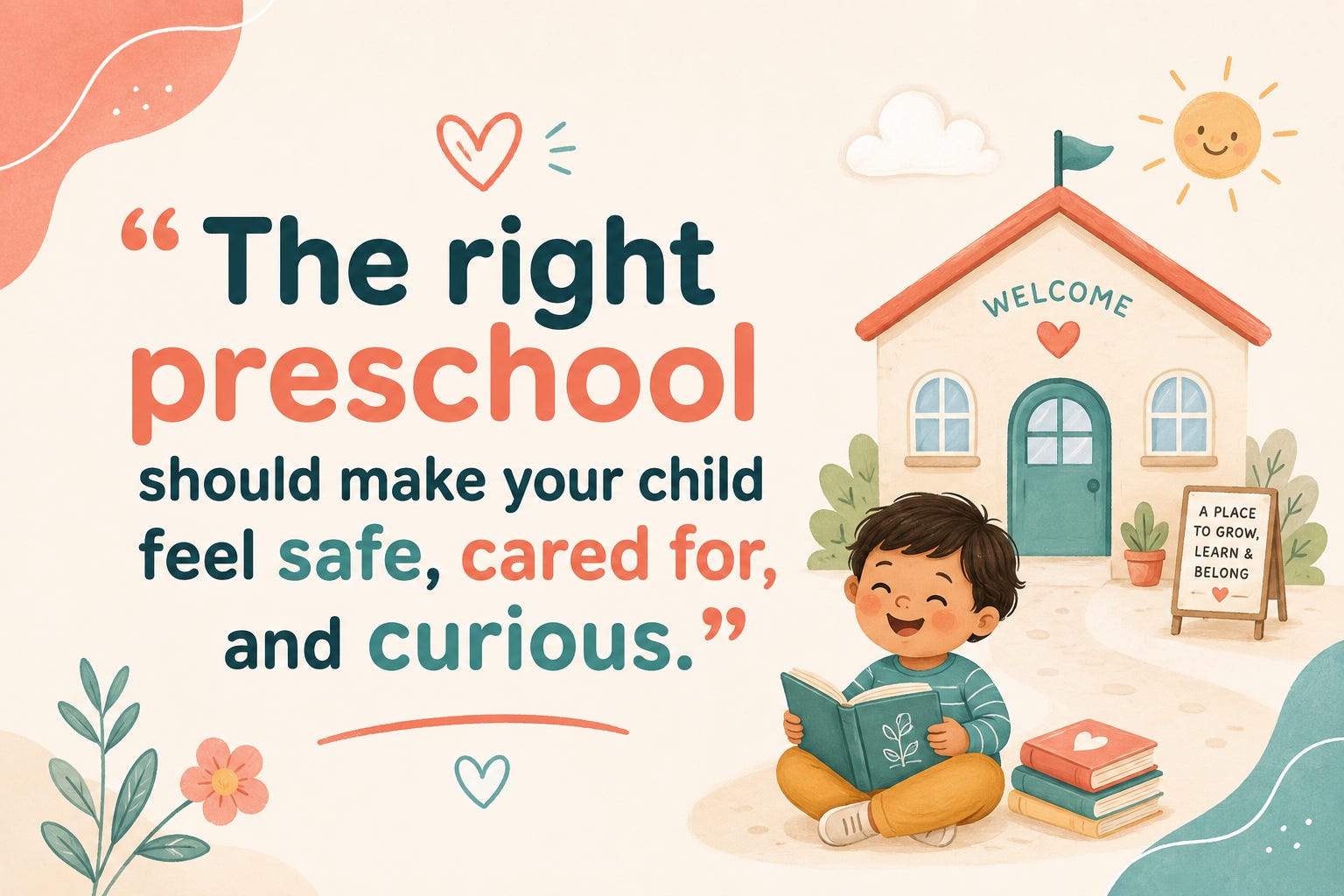
The best preschool is the one where your child feels safe, cared for, curious, and ready to explore.
A good preschool should support the child’s learning, emotions, social skills, independence, and confidence.
Choose slowly. Visit personally. Ask questions. Observe carefully.
Because preschool is not just the beginning of education.
It is the beginning of your child’s relationship with learning.
Join the Earlyhood Parent Community for trusted guidance on learning, parenting, health, preschool, activities, and storytime for children aged 0–8.