


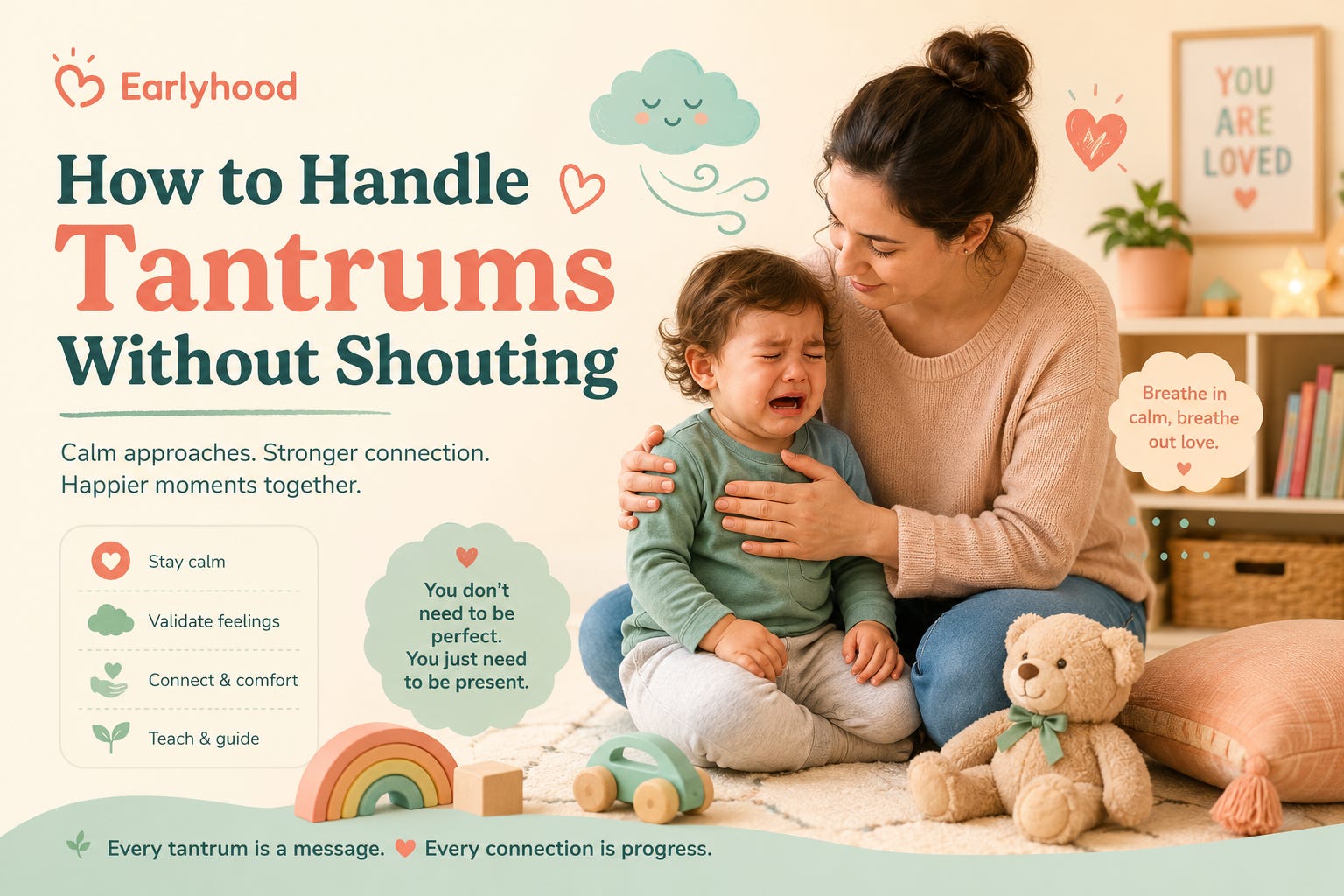
Tantrums are one of the most common and stressful parts of early parenting.
A child may cry loudly in a supermarket, refuse to leave the park, throw toys, scream before bedtime, or suddenly say “no” to everything. In that moment, many parents feel embarrassed, tired, angry, or helpless.
It is natural to feel this way.
But tantrums are not always “bad behaviour.” In early childhood, tantrums are often a child’s way of saying: “I am overwhelmed, tired, hungry, confused, disappointed, or unable to express what I feel.”
Young children are still learning how to manage emotions. They may not have the words, patience, or self-control to explain what is happening inside them. So the emotion comes out through crying, shouting, kicking, or refusing.
The goal is not to stop every tantrum immediately. The goal is to help the child feel safe, calm down, and slowly learn better ways to express feelings.
Why Children Have Tantrums
Tantrums usually happen when a child’s feelings are bigger than their ability to manage them.
Common reasons include:
Tiredness
Hunger
Overstimulation
Sudden change in routine
Wanting something they cannot have
Difficulty sharing
Screen time being stopped
Feeling ignored
Separation anxiety
Not having enough words to explain feelings
For adults, these may look like small problems. But for a young child, they can feel very big.
A child who cries because a toy broke is not trying to trouble you. A child who screams because the TV was switched off is struggling with disappointment. A child who refuses to leave the play area is finding it hard to transition from fun to routine.
When parents understand the reason behind the tantrum, it becomes easier to respond calmly.
What Not to Do During a Tantrum
During a tantrum, avoid reacting with more anger.
Try not to say:
“Stop crying right now.”
“You are being naughty.”
“Everyone is looking at you.”
“I will leave you here.”
“Big kids don’t cry.”
“Why are you always like this?”
These lines may stop the behaviour for a short time, but they do not teach emotional control. They may make the child feel scared, ashamed, or unheard.
Shouting usually increases the child’s stress. When both parent and child are upset, the situation becomes harder to manage.
A calm parent does not mean a weak parent. It means the parent is helping the child borrow calm until the child can find their own.
What to Do Instead
The first step is to pause.
Take a breath before responding. Lower your voice. Come down to the child’s level if possible. Keep your face and body language calm.
Then name the feeling.
You can say:
“I can see you are very upset.”
“You wanted more time to play.”
“You are angry because I said no.”
“You are tired and this feels hard.”
“I am here. We will calm down together.”
Naming feelings helps children understand what is happening inside them. Over time, they begin to use words instead of only crying or shouting.
Set Limits With Kindness
Being calm does not mean giving in to every demand.
Children need love, but they also need limits. The limit should stay firm, but the tone can stay kind.
For example:
“I know you want the toy, but we are not buying it today.”
“You are angry, but I cannot let you hit.”
“You can cry, but I will not allow throwing.”
“Screen time is over. We can read a book now.”
“We have to leave the park. You can hold my hand or I can carry you.”
This teaches the child that feelings are allowed, but unsafe behaviour is not.
Help the Child Calm Down
Different children calm down in different ways.
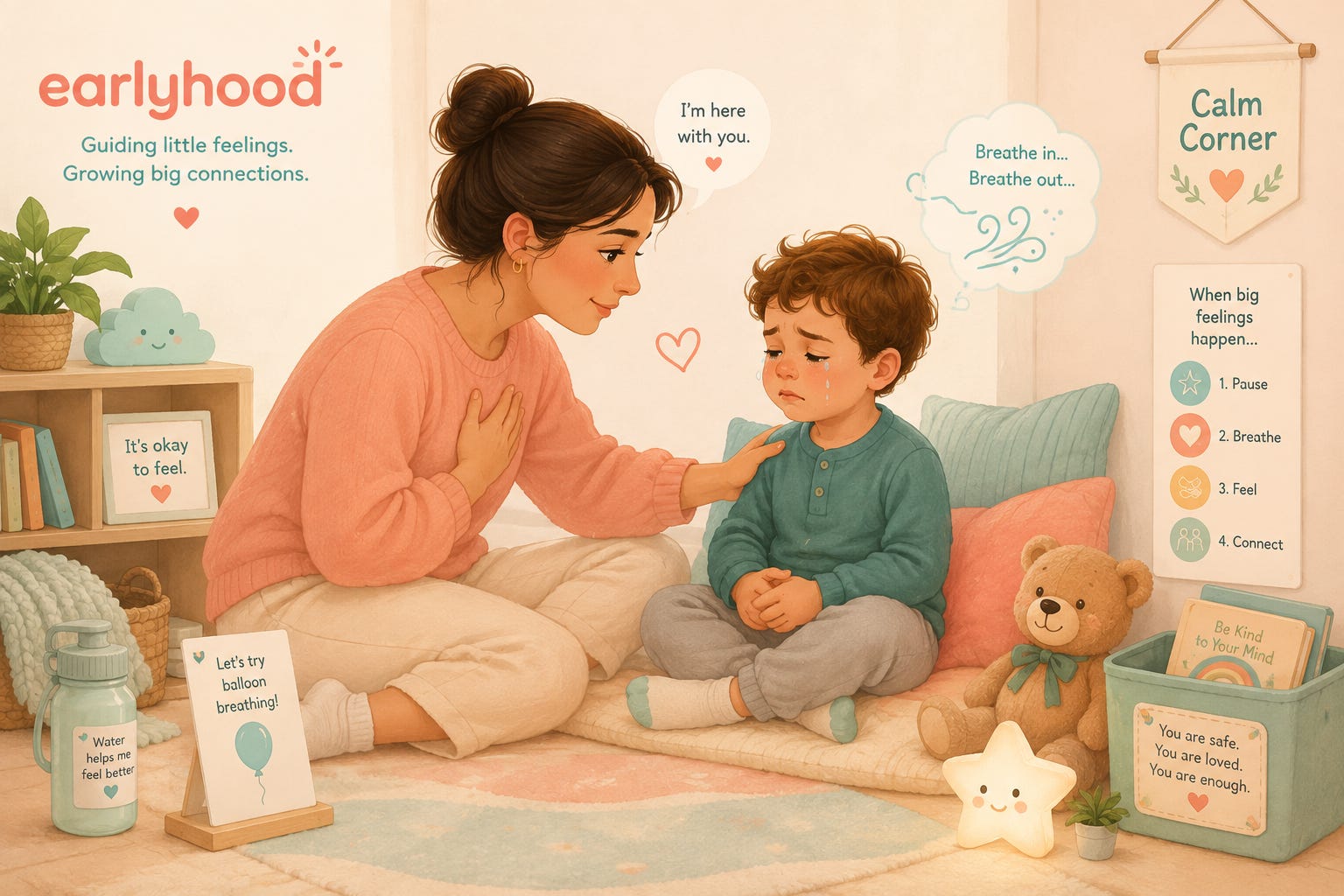
Some children want a hug. Some need space. Some need water. Some need to sit quietly. Some calm down with deep breathing, a soft toy, or a familiar routine.
You can try:
A gentle hug
A quiet corner
Slow breathing together
Counting fingers
Offering water
Holding hands
Using a calm phrase like “You are safe”
Giving two simple choices
Avoid too many explanations during the peak of the tantrum. When a child is very upset, they cannot process long lectures. First help the child calm down. Teach later.
Talk After the Tantrum
Once your child is calm, talk briefly.
You can say:
“You were very angry when we left the park.”
“It is okay to feel angry.”
“But hitting is not okay.”
“Next time, you can say, ‘I need two more minutes’ or ‘I am upset.’”
Keep it short and simple.
This is how emotional learning happens. Not through fear, but through repetition, connection, and practice.
How to Reduce Tantrums Over Time
Tantrums cannot be fully avoided, but they can reduce when children feel more prepared and secure.
Try these habits:
Keep routines predictable.
Give warnings before transitions.
Offer limited choices.
Avoid too much screen time when the child is tired.
Carry snacks and water during outings.
Notice good behaviour.
Spend small moments of undistracted time together.
Use simple language for emotions every day.
For example, before leaving the park, say:
“Five more minutes, then we go home.”
“Two more slides, then shoes.”
“One last swing, then we say bye-bye.”
This helps the child prepare mentally.
Earlyhood Tip
During a tantrum, remember this simple line:
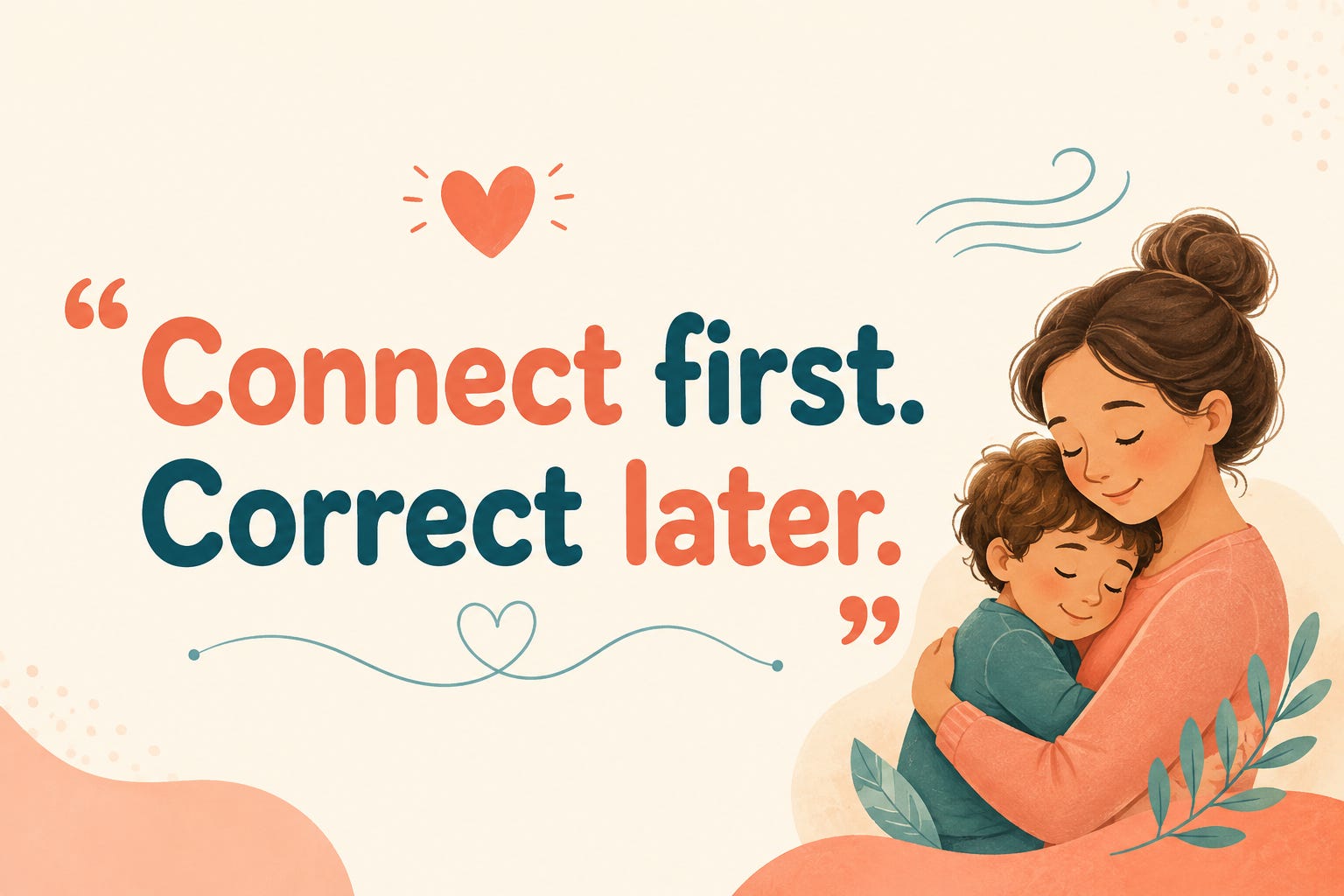
Connect first. Correct later.
First help your child feel safe and calm. After that, teach the right behaviour.
A child learns emotional control slowly. Every calm response from a parent becomes a model for the child.
Final Thought
Tantrums are not proof that you are a bad parent.
They are part of early childhood.
Your child is learning how to handle big emotions, disappointment, limits, tiredness, and change. Your calm response helps them build emotional strength.
You do not need to be perfect. You only need to come back to calm, again and again.
Because children learn regulation through relationship.
And sometimes, the most powerful parenting moment is not when we control the child, but when we control our own reaction.
Join the Earlyhood Parent Community for trusted guidance on learning, parenting, health, preschool, activities, and storytime for children aged 0–8.