


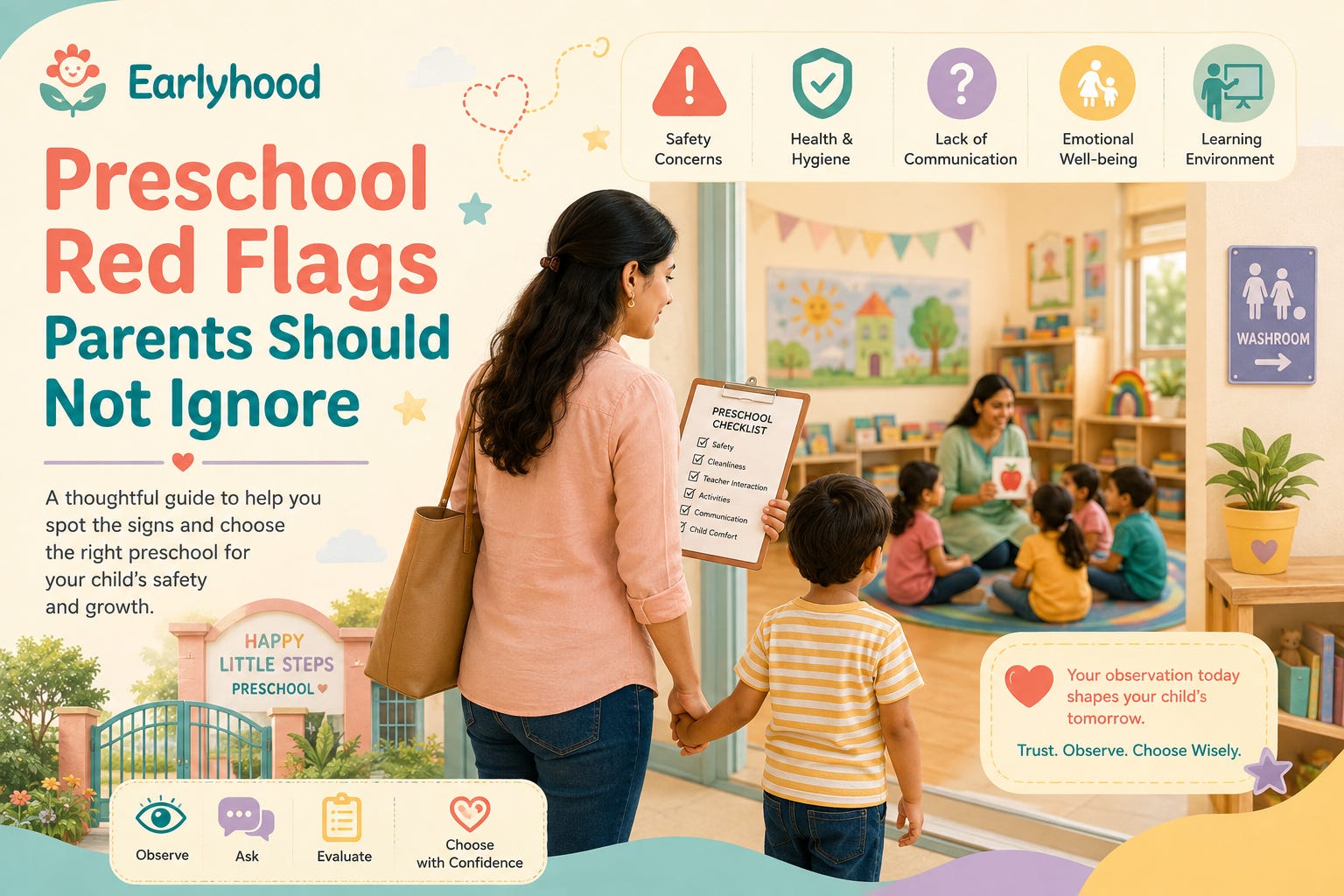
Choosing a preschool is one of the first big decisions parents make for their child.
Parents usually look at location, fees, curriculum, classrooms, reviews, activities, and brand name. These things matter. But before everything else, parents should check one important thing: does this preschool feel safe, warm, and right for my child?
A preschool may look colorful and impressive from outside, but small red flags can show deeper problems in care, safety, communication, hygiene, or teaching style.
No preschool is perfect. Small issues can happen anywhere. But repeated warning signs should not be ignored.
Here are important preschool red flags every parent should notice before admission.
1. Teachers Are Harsh or Not Warm
The teacher is the heart of a preschool.
During your visit, observe how teachers speak to children. Do they smile? Do they bend down to the child’s level? Do they listen patiently? Do children look comfortable around them?
Red flags include shouting, scolding, ignoring crying children, comparing children, or using harsh words.
Young children need emotional safety before they can learn. A kind teacher can make even a simple classroom feel safe. A harsh teacher can make even a beautiful preschool feel unsafe.
2. Children Look Fearful or Uncomfortable
Not every child will be happy every minute. Some children may cry during settling. Some may be quiet or tired.
But if many children look scared, silent, withdrawn, or afraid to speak, parents should notice.
A preschool should feel active, warm, and child-friendly. Children should be allowed to explore, talk, ask, play, and make mistakes.
If the classroom feels too controlled or children look fearful, it may be a sign that the environment is not emotionally comfortable.
3. Too Much Writing and Worksheet Pressure
Many preschools try to impress parents by showing writing books, worksheets, homework, and early academic progress.
But preschool children need much more than writing.
They need play, stories, rhymes, movement, pretend play, art, outdoor time, conversation, and social development.
Red flags include long worksheet hours, heavy homework, pressure to write too early, very little playtime, and children sitting for long periods.
Early learning should build curiosity, not pressure.
4. Safety Process Is Unclear
Safety should never be vague.
Parents should ask about entry, exit, pick-up rules, CCTV, visitor records, staff verification, emergency care, and transport safety.
Red flags include open gates, no visitor record, unclear pick-up system, casual answers about safety, no emergency plan, or no clarity on who supervises children.
A good preschool should confidently explain how it protects children every day.
If the school says only “Don’t worry, everything is safe” without details, ask more questions.
5. Hygiene and Washrooms Are Not Clean
Preschool children use washrooms, eat snacks, sit on floors, touch toys, and play closely with other children.
So hygiene matters.
Check washrooms, classrooms, snack areas, toys, drinking water, and play spaces.
Red flags include dirty washrooms, bad smell, wet floors, no soap, unclean toys, dusty classrooms, open dustbins, or poor handwashing routines.
A preschool does not need to be luxurious, but it must be clean, safe, and child-friendly.
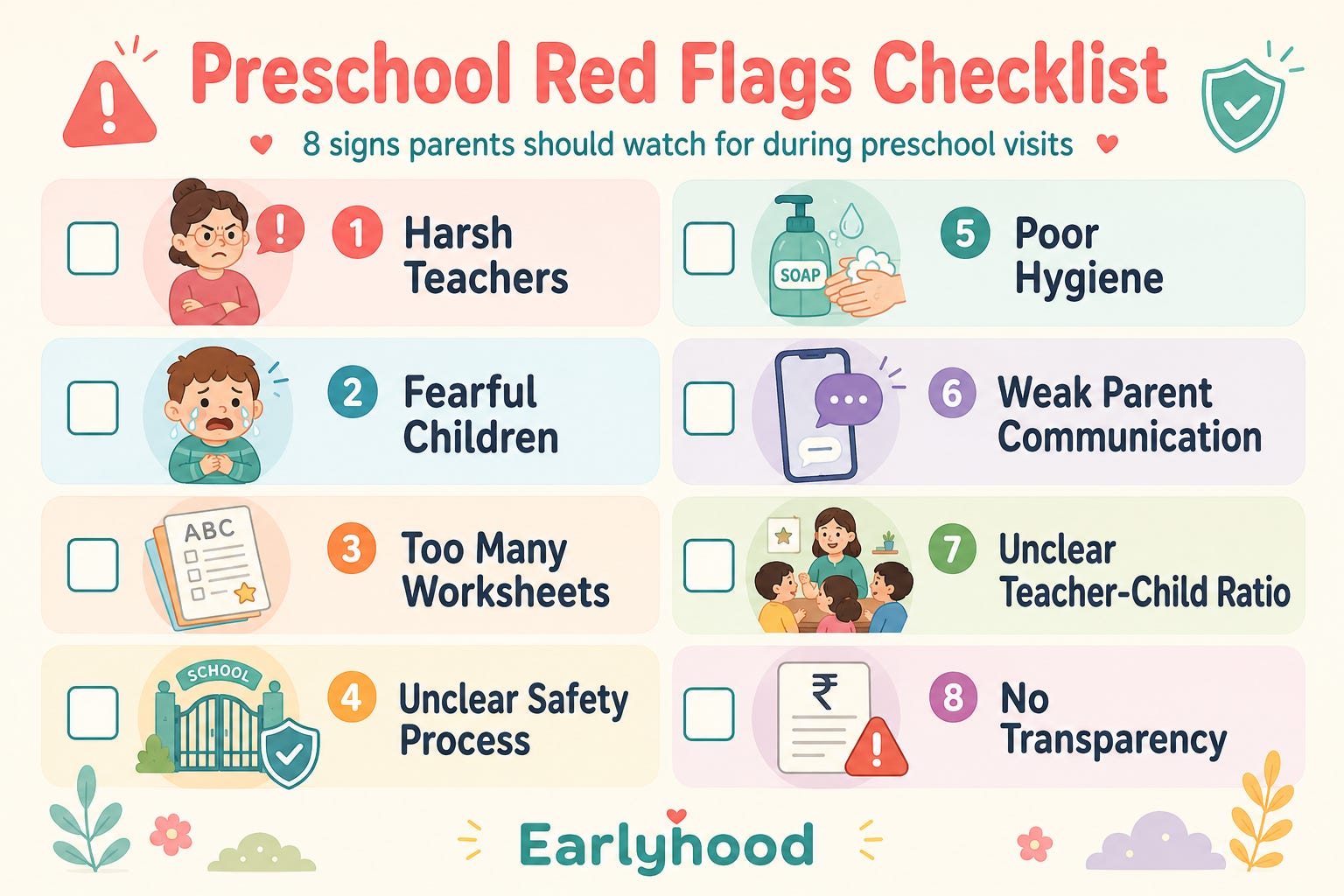
6. Poor Communication With Parents
Parents should know how their child is adjusting, eating, playing, crying, learning, and interacting.
Red flags include no regular updates, teachers not available for discussion, injuries not clearly reported, concerns not explained properly, and management avoiding parent questions.
A good preschool keeps communication simple and transparent.
Parents should not feel like they are disturbing the school when asking about their child.
7. Teacher-Child Ratio Is Not Clear
Young children need attention and supervision.
If one teacher is handling too many children, it can affect safety, care, and emotional support.
Ask:
How many children are in one class?
How many teachers and helpers are present?
Who supports washroom routines?
Who supervises outdoor play?
Who manages snack time?
If the school cannot answer clearly, it is a red flag.
A good preschool should have enough adults to observe, guide, comfort, and support children.
8. Child Becomes Repeatedly Distressed
Some crying during preschool settling is normal.
But repeated distress should not be ignored.
Notice if your child cries intensely for many weeks, becomes fearful before school, suddenly refuses to talk about school, shows fear of a teacher, comes home withdrawn, or has repeated unexplained injuries.
Do not panic after one bad day. But if the pattern continues, speak to the school, observe carefully, and trust your instinct.
A good preschool will work with parents to support the child’s adjustment.
9. The School Avoids Transparency
A trustworthy preschool should be comfortable answering questions.
Red flags include rushed admission pressure, unclear fees, no classroom visit, vague curriculum explanation, hidden charges, different answers from different staff, or hesitation to discuss safety and child-handling.
Parents should know what their child will do every day, who will care for them, how safety is managed, and what fees include.
Transparency builds trust.
10. Parents Are Discouraged From Asking Questions
This is a serious red flag.
Statements like these should worry parents:
“Parents should not interfere.”
“You are worrying too much.”
“No need to ask so many questions.”
“Just trust us.”
“All schools are the same.”
“No need to meet the teacher.”
Parent questions are not interference. They are responsibility.
A good preschool welcomes questions because it understands that trust is built through clarity.
What Parents Should Do
If you notice one red flag, first clarify.
Ask politely:
“Can you explain your process?”
“How is this handled daily?”
“Who supervises this area?”
“How will parents be informed?”
“What happens in an emergency?”
If the school gives clear answers and shows openness, that is a good sign.
But if the school becomes defensive, vague, rude, or dismissive, pause before deciding.
Earlyhood Tip
Use this simple preschool red flag formula:
If safety is vague, teachers are harsh, hygiene is poor, communication is weak, or your child feels unsafe — pause before admission.
A preschool should make both child and parent feel secure.
Final Thought
The right preschool is not only about colorful walls, activities, curriculum, or brand name.
It is about safety, warmth, hygiene, communication, teacher behaviour, transparency, and child comfort.
Parents should never feel shy about asking questions.
A good preschool will welcome your questions, respect your concerns, and protect your child’s emotional and physical safety.
Because early learning begins best when children feel safe, happy, and cared for.
Join the Earlyhood Parent Community for trusted guidance on learning, parenting, health, preschool, activities, and storytime for children aged 0–8.