


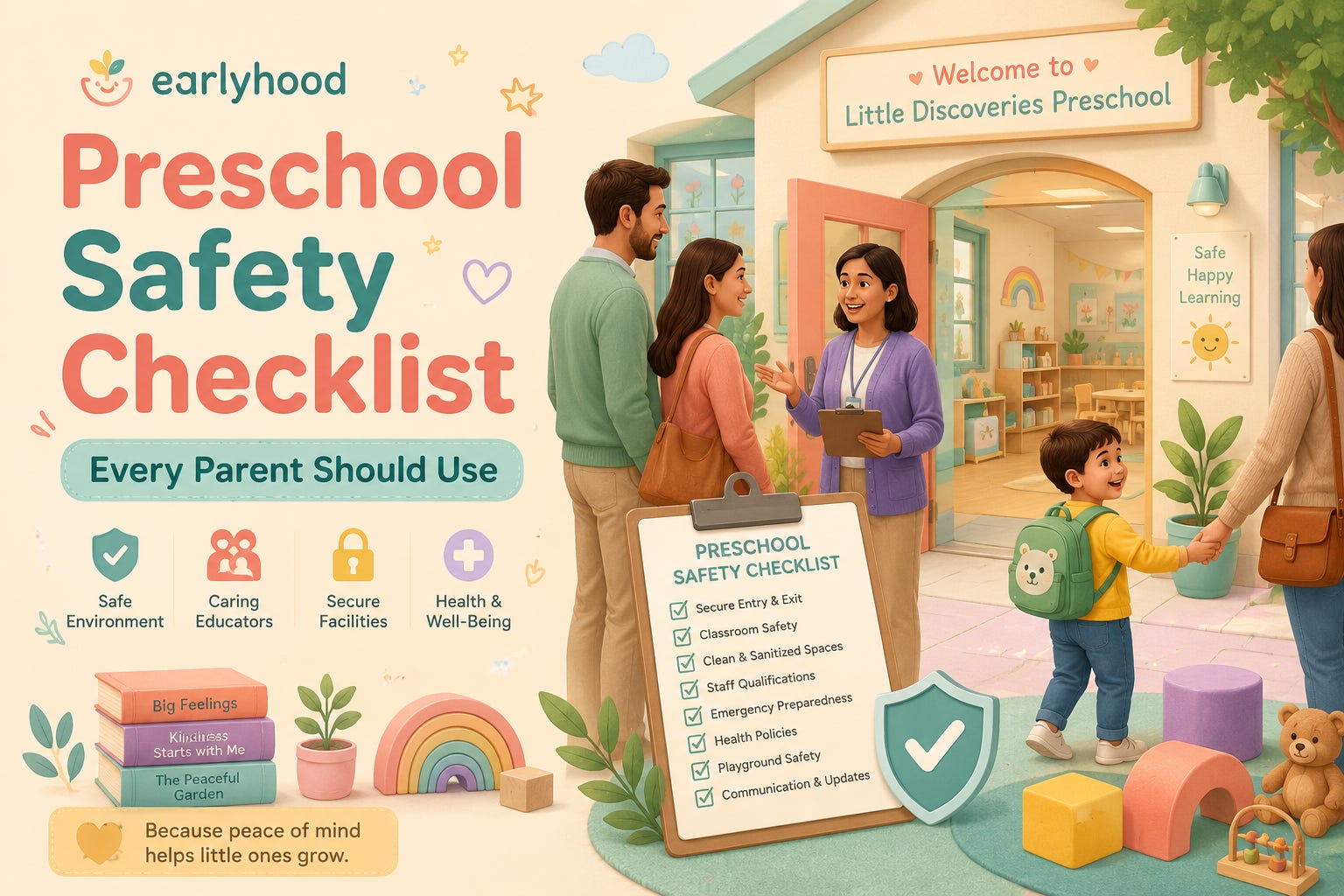
When parents choose a preschool, they usually look at many things.
They check the location, fees, curriculum, classroom design, teachers, activities, transport, and brand reputation. All of these matter.
But one thing should always come first: safety.
A preschool may look beautiful, colourful, and premium, but parents must carefully observe whether it is truly safe for young children. Preschool children are still learning how to walk carefully, use washrooms, climb stairs, express discomfort, follow rules, and protect themselves.
That is why a clear safety checklist helps parents ask the right questions and notice the right details.
Preschool safety is not only about CCTV or security guards. It includes physical safety, emotional safety, hygiene, staff behaviour, pick-up systems, emergency readiness, washroom care, transport safety, and teacher supervision.
Here is a practical preschool safety checklist every parent should use.
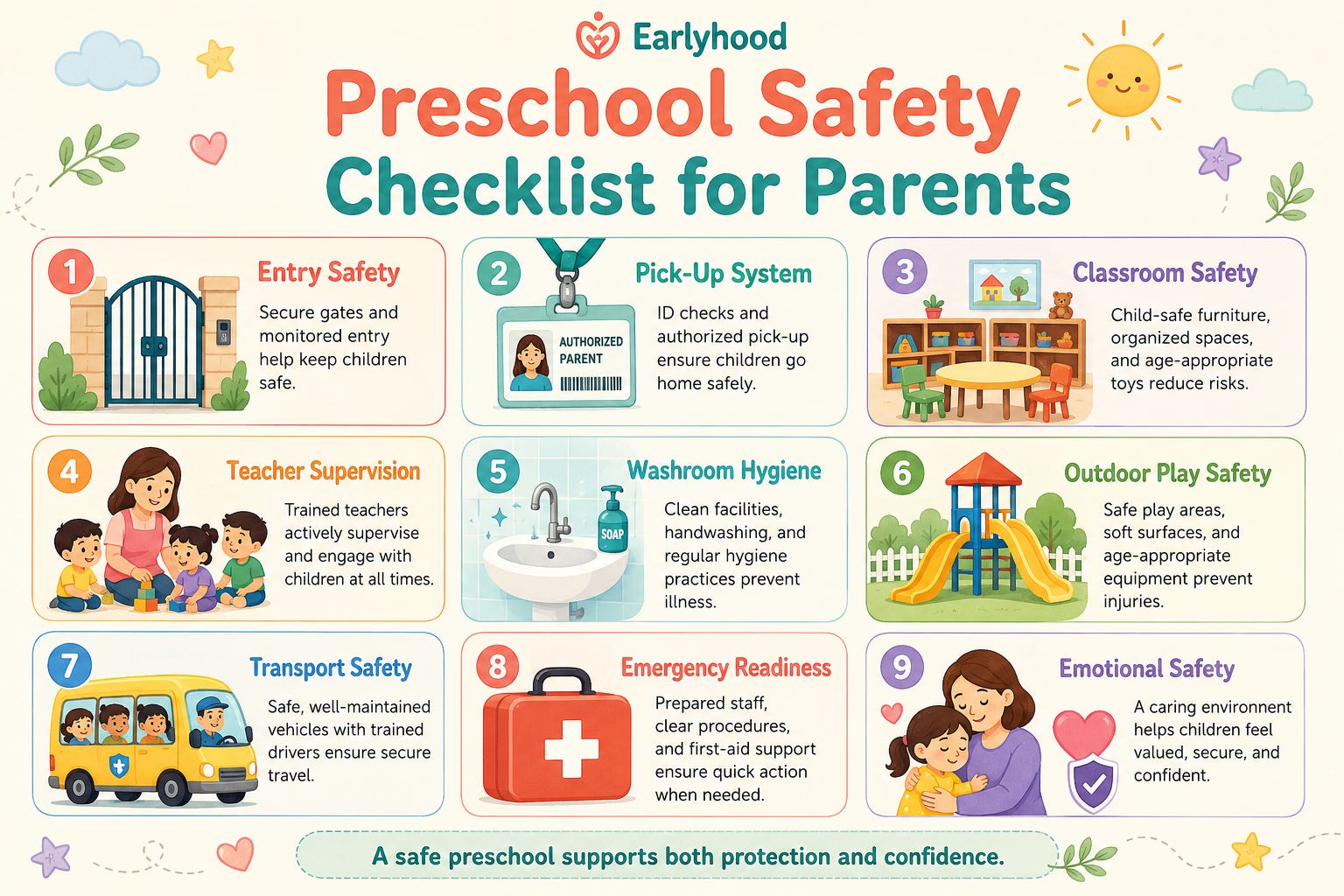
1. Entry and Exit Safety
Start from the entrance.
A preschool should have a controlled entry system. Visitors should not be able to enter classrooms freely without permission.
Parents should ask:
Who is allowed inside the preschool?
Is there a security guard or front desk check?
Are visitor details recorded?
Are gates closed during school hours?
Can strangers enter the building easily?
Also observe whether the main gate is child-safe. Young children should not be able to run outside unnoticed.
A good preschool should take entry and exit seriously.
2. Pick-Up and Drop Safety
Pick-up time can be busy and confusing.
The preschool should have a clear system for who can collect the child.
Ask:
Who is allowed to pick up my child?
Do you check ID or authorization?
What happens if someone else comes for pick-up?
Can parents update pick-up permissions?
How do you manage rush time?
The school should never hand over a child casually.
Parents should also inform the school clearly if a grandparent, driver, nanny, or relative is collecting the child.
3. Classroom Safety
Classrooms should be designed for young children.
Look carefully at the furniture, corners, shelves, wires, fans, windows, doors, and toys.
Check:
Are tables and chairs child-sized?
Are sharp corners protected?
Are shelves stable?
Are electrical points covered?
Are small choking-risk objects kept away?
Are toys safe and age-appropriate?
Are floors clean and non-slippery?
Are windows secure?
Are doors safe for little fingers?
A beautiful classroom is not enough. It must be safe for movement, play, and exploration.
4. Teacher Supervision
Young children need constant supervision.
Even a safe classroom can become unsafe if children are left unattended.
Ask:
How many teachers are present in one class?
Are assistant teachers available?
Are children supervised during playtime?
Who watches children during snack time?
Who supports washroom visits?
Are children ever left alone in classrooms?
Teacher-child ratio matters because one teacher cannot safely supervise too many small children at once.
During your visit, observe whether teachers are alert or distracted.
5. Washroom Safety and Hygiene
Washrooms are an important part of preschool safety.
They should be clean, child-friendly, and supervised appropriately.
Check:
Are washrooms clean and dry?
Are toilets child-sized or supported with safe steps?
Is the floor slippery?
Is there enough water and soap?
Are children helped respectfully?
How are toilet accidents handled?
Are boys and girls supervised safely?
Are staff trained for washroom routines?
Parents should also ask how the school handles children who are not fully toilet trained.
A good preschool should manage this with patience, dignity, and hygiene.
6. Outdoor Play Safety
Outdoor play is important, but the play area must be safe.
Check the playground carefully.
Look for:
Soft or safe flooring
No broken equipment
No sharp metal edges
Safe swings and slides
Proper fencing
Clean play area
No open drains
No loose stones or glass
Teacher supervision during play
Age-appropriate equipment
Young children should not be left to climb, slide, or run without adult attention.
Outdoor play should feel joyful, not risky.
7. Transport Safety
If you plan to use preschool transport, check it properly.
Ask:
Is the vehicle registered and maintained?
Is there a trained driver?
Is there a female attendant or helper?
Are children seated safely?
Is the route shared with parents?
How are pick-up and drop timings tracked?
What happens if the child cries in the vehicle?
Is attendance checked before and after travel?
Do not choose transport only because it is convenient.
For young children, safe transport is very important.
8. CCTV and Monitoring
Many parents ask first about CCTV.
CCTV can support safety, but it should not be the only safety system.
Ask:
Where are cameras installed?
Are classrooms covered?
Are common areas covered?
Who monitors the footage?
Can parents access footage when needed?
How long is footage stored?
Are washrooms kept private?
CCTV is helpful, but real safety still depends on trained staff, proper supervision, clear rules, and responsible management.
9. Staff Verification and Training
Preschool safety depends on every adult in the building.
Not only teachers, but also helpers, drivers, cleaners, guards, and admin staff should be verified and trained.
Ask:
Are staff background checks done?
Are teachers trained in child handling?
Are helpers trained in hygiene and safety?
Is first-aid training provided?
How do staff handle crying or upset children?
Who supervises support staff?
Parents should feel confident that every adult around the child is responsible and respectful.
10. Emergency Preparedness
Every preschool should be prepared for emergencies.
Ask:
Is there a first-aid kit?
Who gives first aid?
Is there a doctor or nearby clinic tie-up?
How are parents informed during emergencies?
Are emergency contact numbers updated?
Is fire safety equipment available?
Are fire drills conducted?
What happens during power cuts, injury, illness, or sudden closure?
The preschool should have a clear emergency plan, not vague answers.
11. Food and Snack Safety
If the preschool provides snacks or meals, parents should check the food safety process.
Ask:
Is food prepared in-house or outsourced?
How is food stored?
Is drinking water clean?
How are allergies handled?
Are children supervised while eating?
Are small children given choking-safe food?
Are parents informed about the menu?
If children carry snacks from home, ask how the school manages food sharing.
Food sharing can be risky for children with allergies or dietary restrictions.
12. Emotional Safety
Safety is not only physical.
Children should feel emotionally safe too.
Observe how teachers speak to children.
Do they shout often?
Do they shame children for crying?
Do they compare children?
Do they punish harshly?
Do they listen when a child is upset?
Do they comfort children with patience?
A preschool should not use fear to control behaviour.
Children need warmth, respect, and emotional security.
A child who feels emotionally safe adjusts better, participates more, and slowly builds confidence.
13. Communication With Parents
A safe preschool communicates clearly with parents.
Ask:
How will I know if my child falls, cries, refuses food, or seems unwell?
Do you inform parents about injuries immediately?
Do you share daily or weekly updates?
Can parents speak to the teacher?
How are concerns handled?
Who should parents contact in an emergency?
Parents should not feel ignored after admission.
A good preschool keeps communication open and respectful.
14. Child Protection Policy
Parents should ask whether the preschool has a written child safety or child protection policy.
This policy should explain how the school protects children from unsafe behaviour, how staff are trained, how complaints are handled, and what steps are taken if a concern is raised.
Ask:
Do you have a child protection policy?
Are all staff trained on it?
How do children report discomfort?
How are complaints investigated?
Who is responsible for safety?
A professional preschool should be comfortable answering these questions.
15. Trust Your Observation
Sometimes parents get impressed by interiors, branding, or admission counselling.
But your observation matters.
During your visit, notice:
Are children relaxed?
Are teachers alert?
Is the environment clean?
Are children supervised?
Are staff respectful?
Are safety questions answered clearly?
Does the school feel transparent?
Does your child seem comfortable?
Your instinct as a parent is important.
If something feels unsafe, unclear, or casually handled, take it seriously.
Earlyhood Tip
Before admission, visit the preschool personally and use this simple safety formula:
Secure entry. Warm teachers. Clean washrooms. Safe play. Clear communication. Emergency readiness.
These six areas will tell you a lot about the preschool’s seriousness toward child safety.
Final Thought
Preschool safety is not one feature.
It is a complete system.
It includes safe classrooms, trained staff, child-friendly washrooms, secure entry, responsible pick-up, supervised play, safe transport, hygiene, emergency planning, and emotional care.
Parents should never feel shy about asking safety questions.
A good preschool will welcome them.
Because when a child feels safe, learning becomes easier.
And when parents feel confident about safety, the preschool journey begins with trust.
Join the Earlyhood Parent Community for trusted guidance on learning, parenting, health, preschool, activities, and storytime for children aged 0–8.