


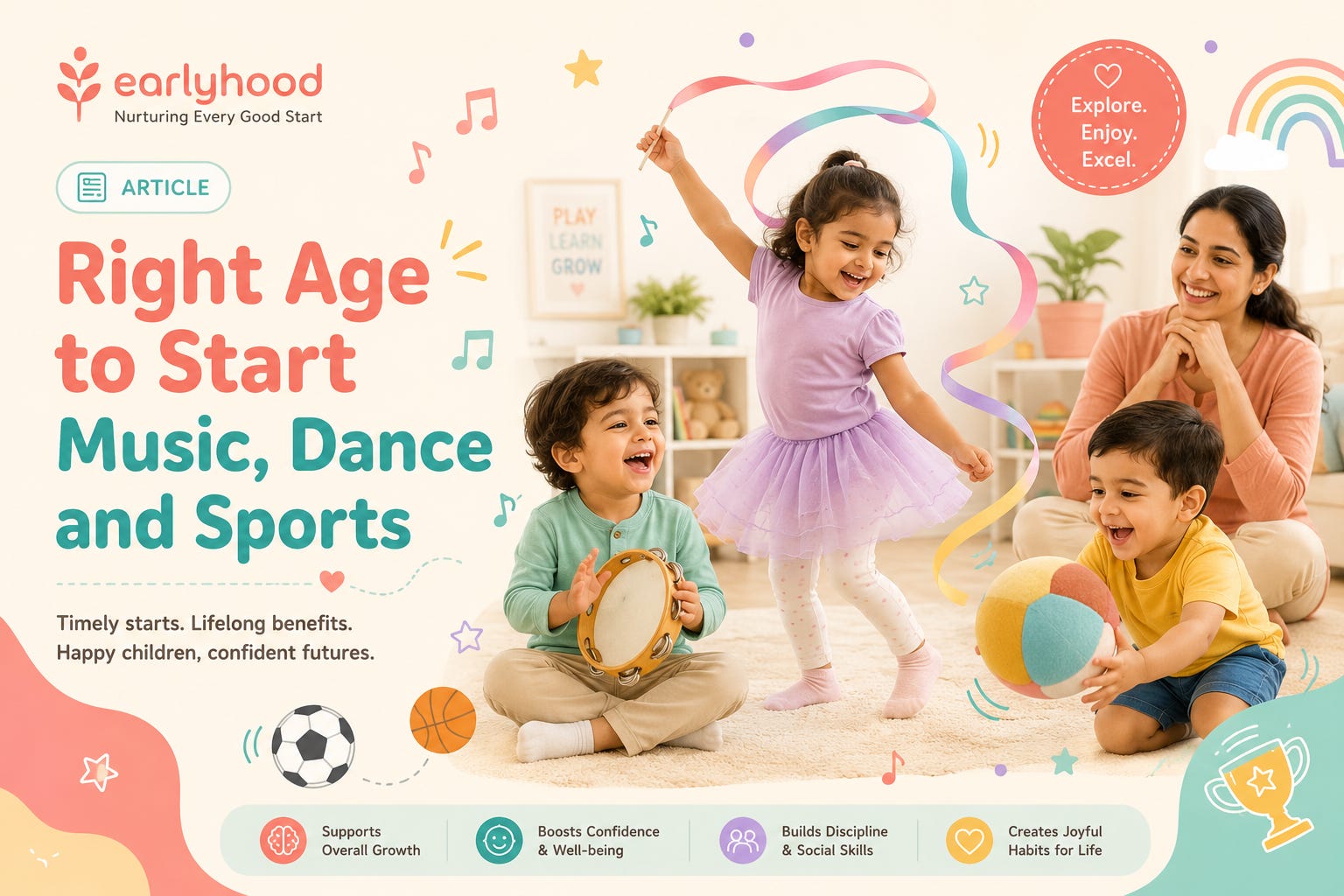
Many parents want their child to learn something beyond school.
Music, dance, sports, art, swimming, skating, football, keyboard, singing, and martial arts are common choices. These activities can build confidence, discipline, creativity, body control, listening skills, social comfort, and emotional expression.
But parents often feel confused.
“Is my child too young?”
“Should we start at 3?”
“Is 5 the right age?”
“What if my child loses interest?”
“Should I choose music, dance, or sports first?”
The answer is simple: children can be introduced early, but formal training should begin gently.
For young children, the goal is not performance. The goal is exposure, joy, rhythm, movement, confidence, and curiosity.
Start With Interest, Not Pressure
Before choosing an activity, observe your child.
Does your child dance when music plays?
Does your child enjoy singing rhymes?
Does your child love running and jumping?
Does your child enjoy throwing balls?
Does your child copy actions from songs?
Does your child like rhythm, clapping, or instruments?
These small signs can help you understand what your child naturally enjoys.
Parents should avoid choosing activities only because other children are doing them. Every child has a different pace, personality, and interest.
An activity works best when the child feels happy to try it.
Music: When Can Children Start?
Music exposure can begin very early.
Even babies enjoy lullabies, soft songs, clapping, and rhythm. Toddlers enjoy rhymes, action songs, drums, shakers, bells, and simple dance movements.
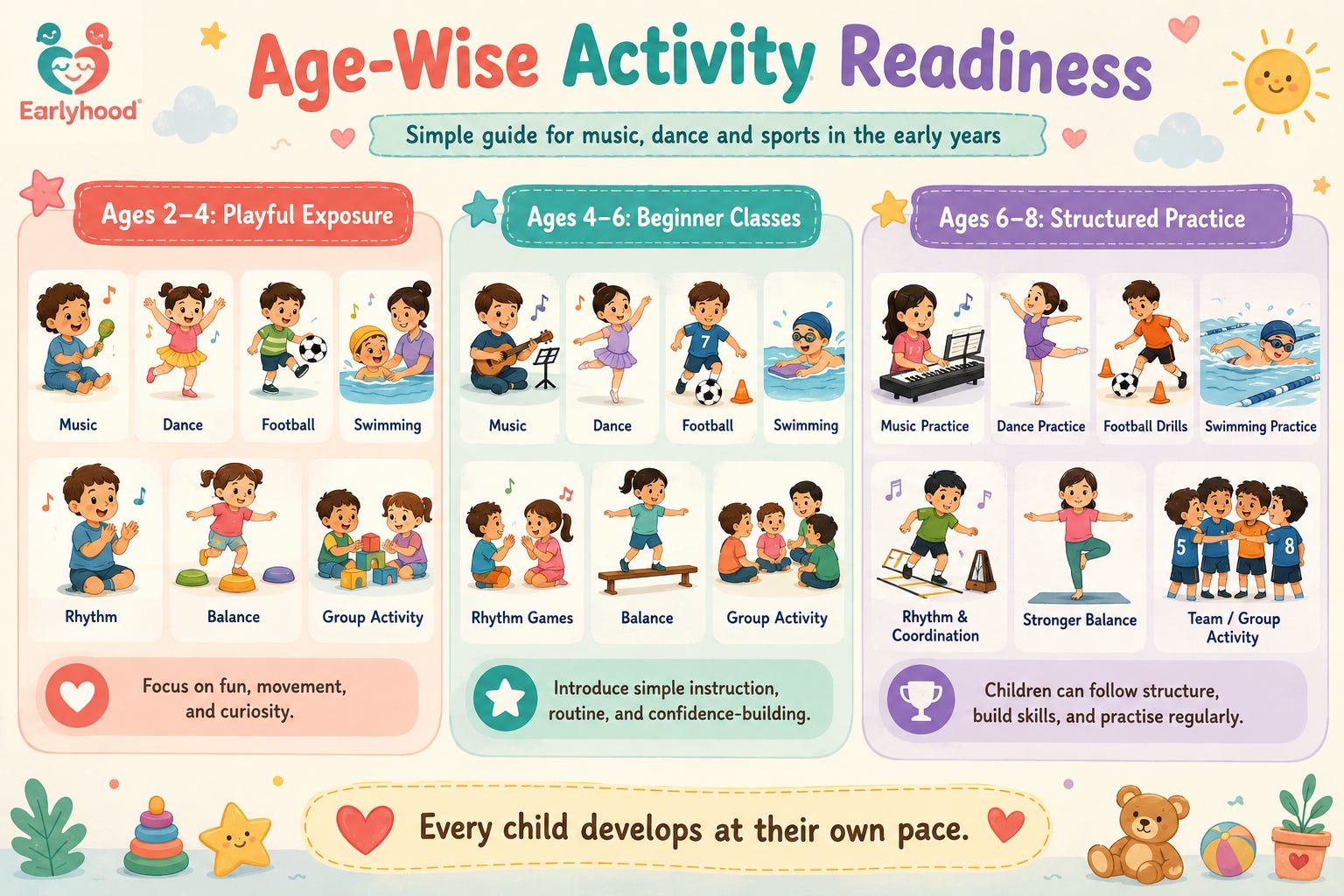
For ages 2–4, music should be playful.
Children can enjoy:
Rhymes
Clapping games
Action songs
Simple rhythm instruments
Singing with parents
Listening to different sounds
Moving to music
Musical storytelling
At this age, music should not feel like serious training.
For ages 5–6, some children may begin basic structured music classes if they show interest and can sit for short periods. Singing, keyboard basics, rhythm games, or beginner-friendly instruments can be introduced gently.
For ages 6–8, children may be more ready for regular practice, simple notes, teacher instructions, and basic performance confidence.
The key is to keep music joyful. A child who enjoys music will learn more naturally.
Dance: When Can Children Start?
Dance can also begin early through free movement.
Toddlers naturally love moving their bodies. They jump, spin, clap, march, and copy actions. This is the beginning of dance.
For ages 2–4, dance should be about fun movement.
Good activities include:
Action songs
Free dance
Animal movements
Simple steps
Rhythm games
Freeze dance
Parent-child dance time
Formal choreography may be too much for many children at this age. The focus should be body awareness, rhythm, confidence, and expression.
For ages 4–6, children can try beginner dance classes if the teacher is patient and the class is playful. Simple routines, group songs, and movement games can work well.
For ages 6–8, children may be ready for more structured dance styles such as classical dance basics, freestyle, hip-hop basics, folk dance, or stage practice.
Parents should choose a dance class that celebrates effort, not only perfection.
Sports: When Can Children Start?
Sports begin with movement.
Before children play formal sports, they need basic physical skills like running, jumping, balancing, catching, throwing, kicking, crawling, and climbing.
For ages 2–4, focus on free movement.
Activities can include:
Running
Jumping
Soft ball play
Balancing games
Crawling tunnels
Climbing safely
Kicking a ball
Throwing into a basket
Simple obstacle courses
At this age, avoid pressure to “play properly.” Let the child enjoy movement.
For ages 4–6, children can begin simple sports exposure such as football basics, swimming with supervision, skating basics, gymnastics play, cycling, or martial arts movement classes.
The class should be safe, age-appropriate, and not overly competitive.
For ages 6–8, children may be more ready for structured sports rules, team play, practice sessions, and skill-building.
Good sports at this age can include football, cricket basics, swimming, skating, badminton, martial arts, gymnastics, athletics, or tennis basics depending on the child’s interest.
What Should Parents Look for in a Class?
The teacher matters more than the activity name.
A good children’s class should feel safe, encouraging, and age-appropriate.
Look for:
Patient instructor
Small batch size
Safe space
Age-wise grouping
No harsh shouting
Warm correction
Enough breaks
Clean environment
Clear communication with parents
Focus on enjoyment and skill, not pressure
For young children, the first experience matters. A harsh teacher or stressful class can make a child dislike the activity.
Choose a place where your child feels seen, supported, and comfortable.
How Many Activities Are Enough?
Many parents enroll children in too many classes.
Music on Monday, dance on Tuesday, swimming on Wednesday, football on Thursday, art on Friday, and tuition on Saturday can make children tired.
Young children need free play and rest too.
For ages 3–5, one activity at a time is usually enough.
For ages 6–8, one or two regular activities can work if the child enjoys them and the routine is not stressful.
More activities do not always mean better development.
A child needs time to be bored, play freely, talk to family, read stories, and rest.
What if the Child Quits?
Children may show interest in something and then lose interest.
This is normal.
A child may love dance for two weeks, then refuse to go. Another child may enjoy football but feel shy in class. Some children need time to adjust before they enjoy group activities.
Before quitting immediately, understand the reason.
Is the class too long?
Is the teacher too strict?
Is the child tired?
Is the timing wrong?
Is the activity too difficult?
Is the child scared of performing?
Does the child need a friend or parent nearby?
Sometimes changing the batch, teacher, timing, or class style helps.
But if the child is consistently unhappy, forcing may create more resistance.
Home Exposure Before Formal Classes
Before joining classes, parents can try simple home exposure.
For music:
Sing rhymes together
Play soft background music
Use claps and beats
Make shakers with bottles
Create a family singing time
For dance:
Play one song and dance freely
Try freeze dance
Copy animal movements
Use scarves or ribbons
Dance during cleaning time
For sports:
Play catch
Kick a soft ball
Create an obstacle course
Walk in the park
Practice balance
Try cycling with support
Home exposure helps parents understand the child’s natural interest.
Earlyhood Tip
Choose activities using this simple rule:
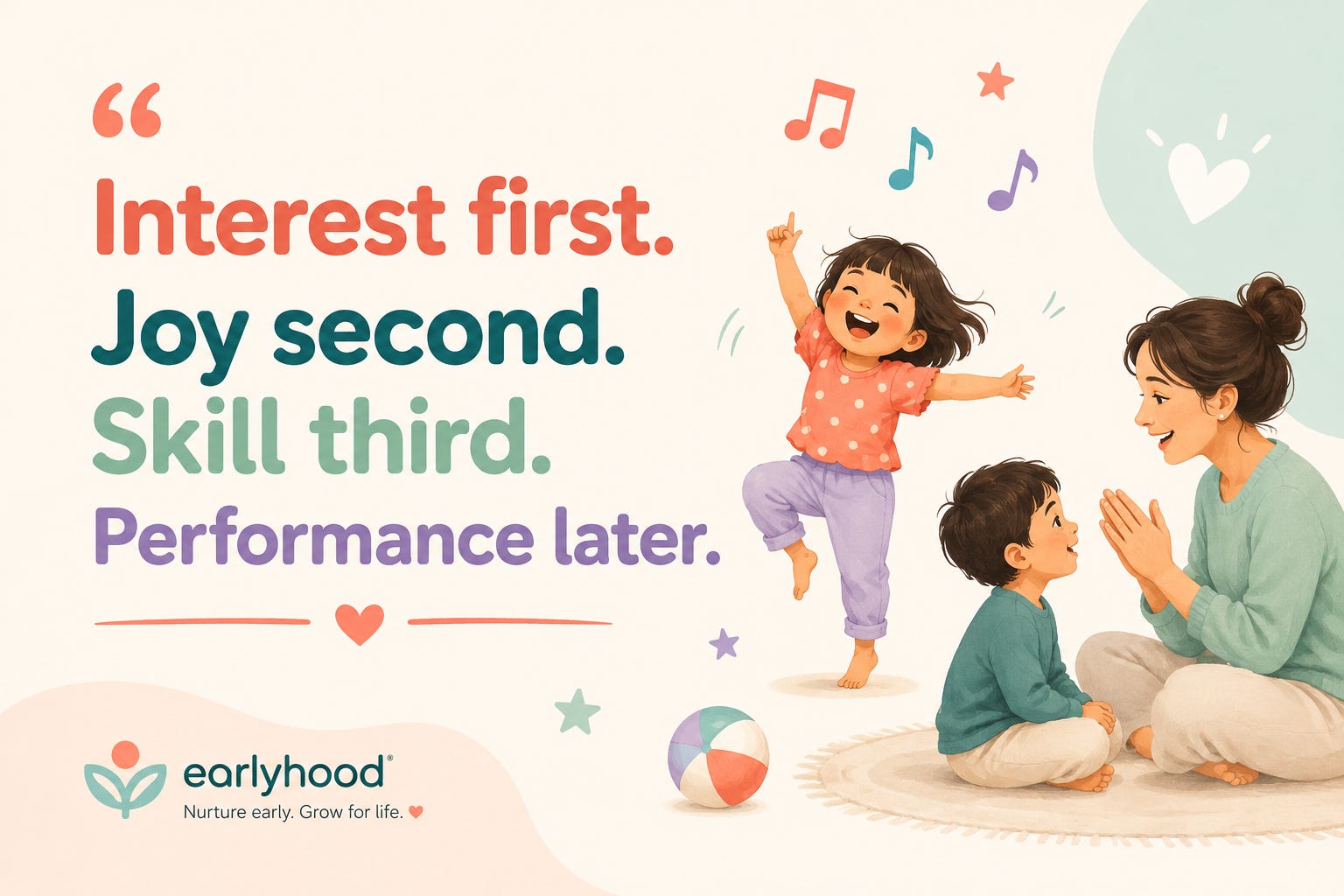
Interest first. Joy second. Skill third. Performance later.
In early childhood, the goal is not to create pressure. The goal is to help children discover what they enjoy and slowly build confidence.
A happy beginner learns better than a pressured performer.
Final Thought
Music, dance, and sports can all support a child’s growth.
Music builds rhythm, listening, memory, and emotional expression.
Dance builds confidence, coordination, creativity, and body awareness.
Sports build strength, teamwork, discipline, and resilience.
But the right age is not the same for every child.
Some children are ready early. Some need time. Some enjoy music first, some love movement, and some discover sports later.
Start gently. Observe your child. Keep the routine balanced. Choose warm teachers. Avoid comparison.
Because childhood activities should not feel like pressure.
They should feel like discovery.
Join the Earlyhood Parent Community for trusted guidance on learning, parenting, health, preschool, activities, and storytime for children aged 0–8.