


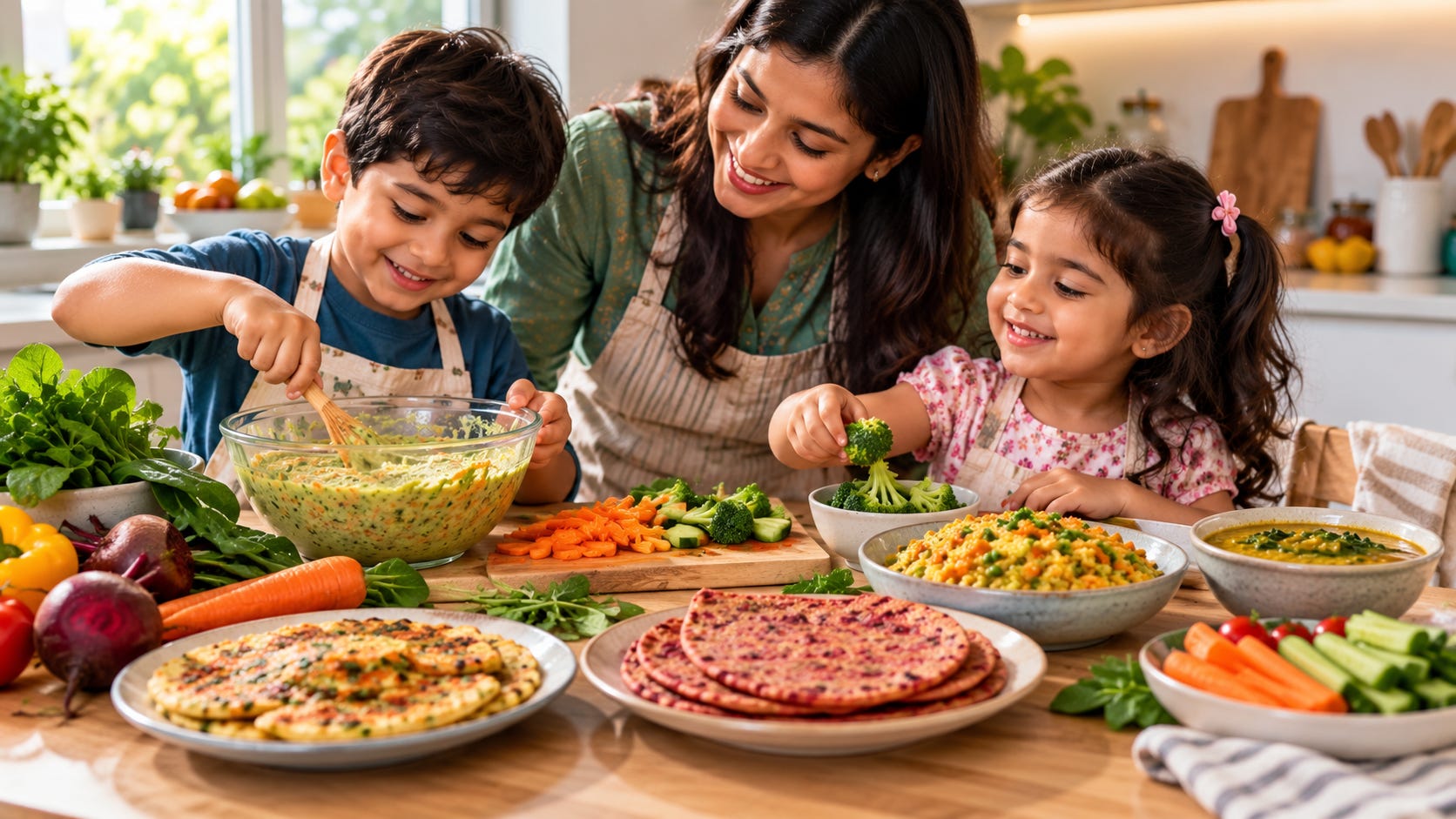
Spinach in dosa batter.
Carrot blended into pasta sauce.
Beetroot mixed into chapati dough.
Is hiding vegetables a good idea?
It can be useful occasionally—but it shouldn’t be the only way your child experiences vegetables.
Hidden vegetables can add nutrition
Adding vegetables to familiar meals can increase variety.
For example:
Vegetable uttapam.
Carrot paratha.
Spinach dal.
Mixed-vegetable khichdi.
There is nothing wrong with using vegetables creatively.
But children should also recognise vegetables
If every vegetable is completely hidden, children may never become familiar with its normal appearance, taste or texture.
Alongside mixed dishes, continue occasionally offering visible vegetables in small portions.
Let children:
Wash them.
Touch them.
Help cut soft foods with an age-safe tool.
See adults eating them.
Avoid tricking your child
You don’t need to announce every ingredient dramatically, but deliberately lying about food can create mistrust—especially with older children.
Keep food conversations relaxed.
Exposure takes time
Children may need repeated opportunities before accepting unfamiliar foods.
One rejected carrot does not mean carrots are permanently banned.
💚 Earlyhood Parent Tip
Mix vegetables in—but show them too.
The long-term goal is not just getting vegetables into your child.
It is helping your child eventually become comfortable eating them.
Source: American Academy of Pediatrics – Helping Picky Eaters Try More Foods