


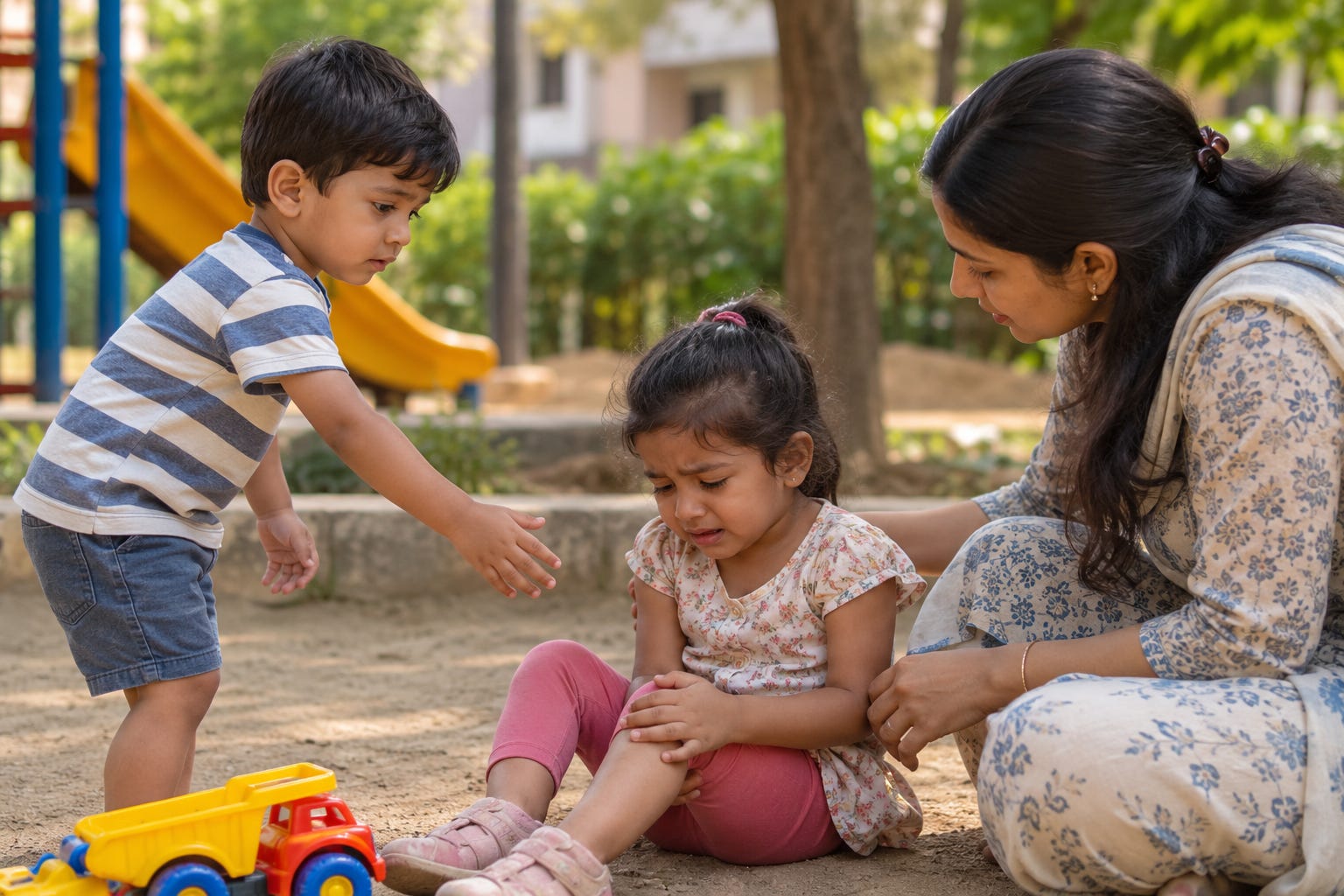
Your child pushes another child.
You immediately say:
“Say sorry!”
They quietly repeat the word—but do they actually understand what happened?
An apology is more meaningful when children understand how their actions affected another person.
Start with what happened
Instead of demanding an immediate apology, calmly explain:
“You pushed her, and she got hurt.”
Then help your child notice the other person’s feelings.
You might ask:
“What can we do to help?”
Depending on the situation, your child might:
Check if the other child is okay.
Return something they took.
Help rebuild something they broke.
Say sorry when they are ready.
Model real apologies
Children learn by watching adults.
If you lose your temper, you can say:
“I shouted earlier. I’m sorry. I should have spoken calmly.”
That teaches children that apologies are about recognising mistakes and repairing relationships—not simply saying a required word.
Don’t shame your child
Avoid labels such as:
“You are naughty.”
Focus instead on the behaviour:
“Hitting is not okay.”
💚 Earlyhood Parent Tip
Teach children that “sorry” is followed by repair.
Understanding the impact of an action is more important than repeating one word automatically.
Source: American Academy of Pediatrics – Communication & Discipline