


“If you finish this, I’ll give you chocolate.”
Parents often use rewards to encourage children—but rewards work best when they are used thoughtfully.
The goal is not to make children expect a prize for every ordinary responsibility.
Focus on the behaviour first
Be clear about what you want your child to practise.
Instead of:
“Be good today.”
try:
“Please put your school bag away when we get home.”
Then notice when they do it.
Specific praise may be enough:
“You remembered to put your bag away without being reminded.”
When can a reward chart help?
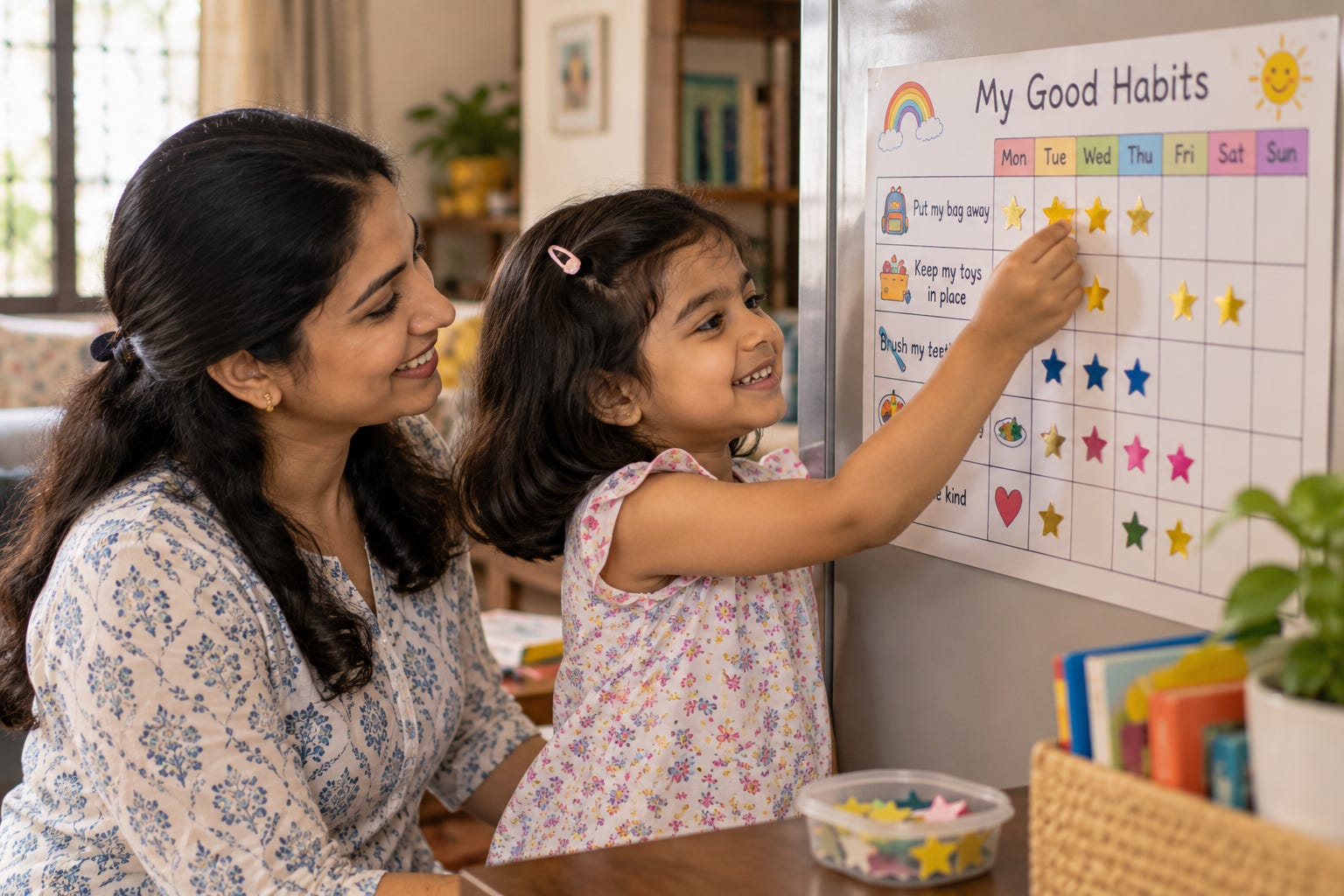
For a behaviour your child is genuinely working on, a simple star or point chart can sometimes provide extra motivation.
The American Academy of Pediatrics suggests defining the positive behaviour clearly, tracking progress and using rewards as positive reinforcement rather than giving penalties or taking points away.
As the behaviour becomes a habit, gradually reduce the reward.
Rewards don’t need to be things
Try:
Choosing the family game.
Extra story time.
Picking Saturday’s activity.
Cooking something together.
Avoid using sweets as the default reward for behaviour.
💚 Earlyhood Parent Tip
Use rewards as a temporary teaching tool, not the reason your child does everything.
Over time, praise the habit itself.
Source: American Academy of Pediatrics – Positive Reinforcement Through Rewards