


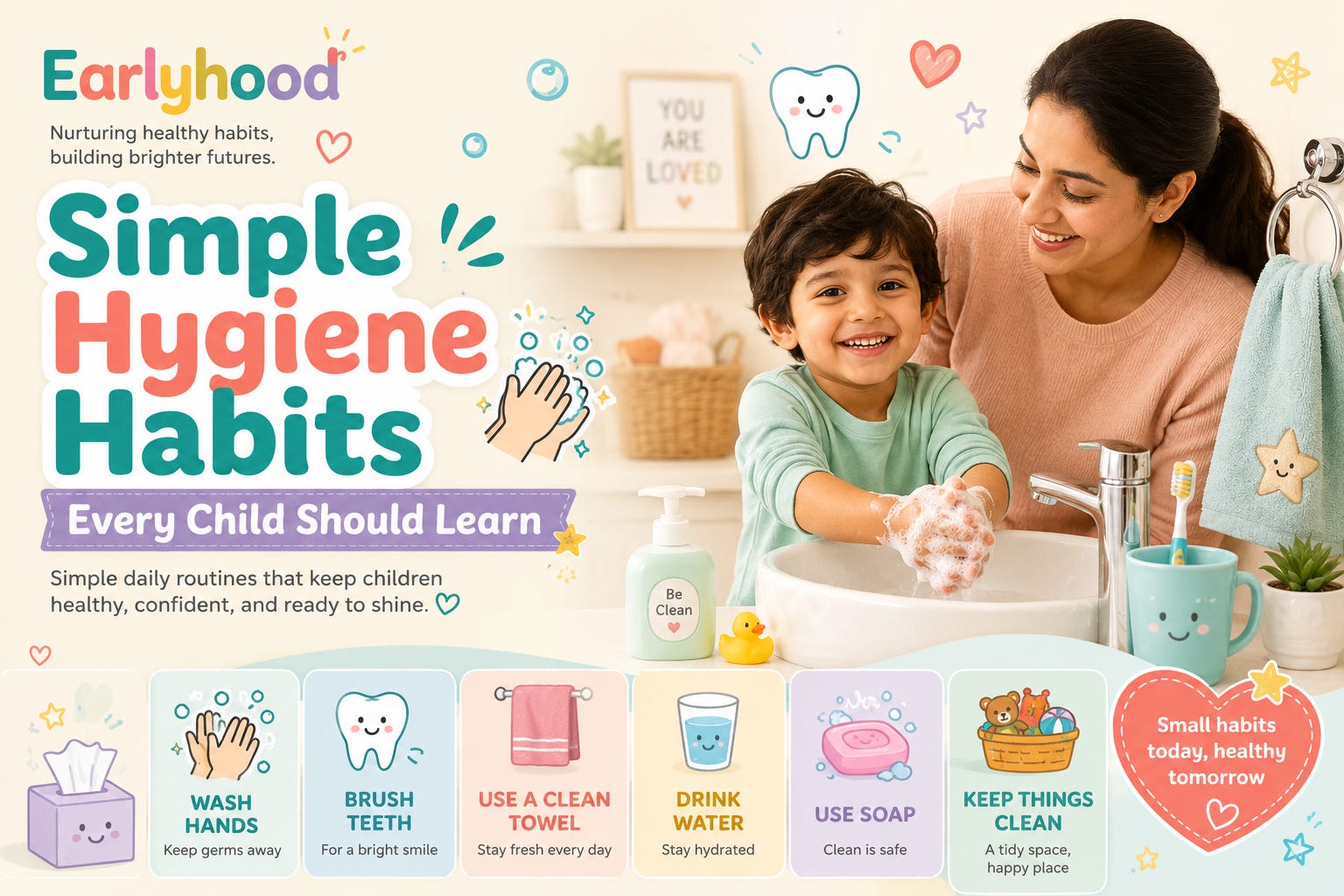
Hygiene is one of the first health habits children learn at home.
Before children fully understand germs, illness, or cleanliness, they learn by watching adults. They notice how parents wash hands, brush teeth, bathe, cover coughs, clean up, and take care of daily routines.
For children aged 0–8, hygiene should not feel like punishment or pressure. It should feel like a normal part of daily life.
When hygiene habits are taught calmly and repeated every day, children slowly become more independent. These small habits can also support better health at home, preschool, daycare, play areas, and public places.
Why Hygiene Habits Matter
Young children touch everything.
They touch toys, floors, shoes, pets, playground equipment, food, books, and sometimes their mouth and nose. This is normal because children explore the world through their hands and senses.
That is why hygiene habits are important.
The CDC explains that personal hygiene includes regular washing, hand and foot hygiene, nail grooming, facial cleanliness, and covering coughs and sneezes. These are simple but important everyday habits for reducing the spread of germs.
The goal is not to make children afraid of dirt. The goal is to help them understand clean routines in a healthy and practical way.
1. Washing Hands Properly
Handwashing is one of the most important hygiene habits.
Children should learn to wash hands:
Before eating
After using the toilet
After playing outside
After touching pets
After coughing, sneezing, or blowing the nose
After coming home from outside
After touching dirty surfaces
The CDC recommends reminding children to wash hands after using the bathroom, before eating, after touching pets, after playing outside, and after coughing, sneezing, or blowing their nose.
Teach children the steps slowly:
Wet hands
Apply soap
Rub palms
Clean between fingers
Clean back of hands
Clean under nails
Rinse well
Dry with a clean towel
For young children, make it playful. Use a short song, counting game, or “bubble hands” routine.
2. Brushing Teeth Twice Daily
Dental hygiene should begin early.
Children should learn that brushing is not only for fresh breath. It protects teeth, gums, and smiles.
A simple rule works well:
Brush in the morning.
Brush before sleeping.
Night brushing is especially important because food and milk residue can stay around teeth while the child sleeps.
Parents should help young children brush until they develop good brushing skills. The CDC also recommends helping children brush and using fluoride toothpaste as part of oral health care.
Make brushing easier with:
A child-size toothbrush
A small amount of toothpaste
A mirror
A brushing song
A two-minute timer
A simple reward chart
Parent brushing together
Avoid using scary lines like, “Dentist will remove your teeth.” Instead, say, “We brush to keep our teeth strong.”
3. Bathing and Body Cleanliness
Children should learn that bathing keeps the body fresh and clean.
Daily bathing routines may differ by weather, activity, family habit, and child age. But children should slowly learn to clean important areas like hands, feet, face, underarms, neck, and private areas with parent guidance.
For young children, parents must supervise bath time for safety.
Teach simple bath habits:
Use soap properly
Wash feet after outdoor play
Clean behind ears
Dry body properly
Wear clean clothes
Put dirty clothes in the laundry basket
Do not make children feel ashamed of sweat, smell, or dirt. Say calmly:
“You played a lot. Now let’s wash and feel fresh.”
4. Covering Coughs and Sneezes
Children should learn cough and sneeze manners early.
Teach them to cough or sneeze into a tissue or elbow, not into their hands. If they use a tissue, they should throw it in the dustbin and wash hands.
The CDC recommends covering the mouth and nose with a tissue when coughing or sneezing.
Use simple language:
“Cough into your elbow.”
“Sneeze into tissue.”
“Tissue goes in dustbin.”
“Now wash hands.”
Make it a small routine instead of scolding.
5. Keeping Nails Clean and Short
Children’s nails can collect dirt because they play with soil, toys, crayons, food, and outdoor surfaces.
Teach children that nails should be clean and trimmed.
Parents can make nail care a weekly habit.
For example:
Sunday evening nail check
Trim nails after bath
Wash under nails during handwashing
Avoid nail biting
Keep nail cutter safe and used by adults
Some children dislike nail cutting. Prepare them gently.
Say:
“We will cut only a little.”
“You can choose which hand first.”
“After this, your hands will feel clean.”
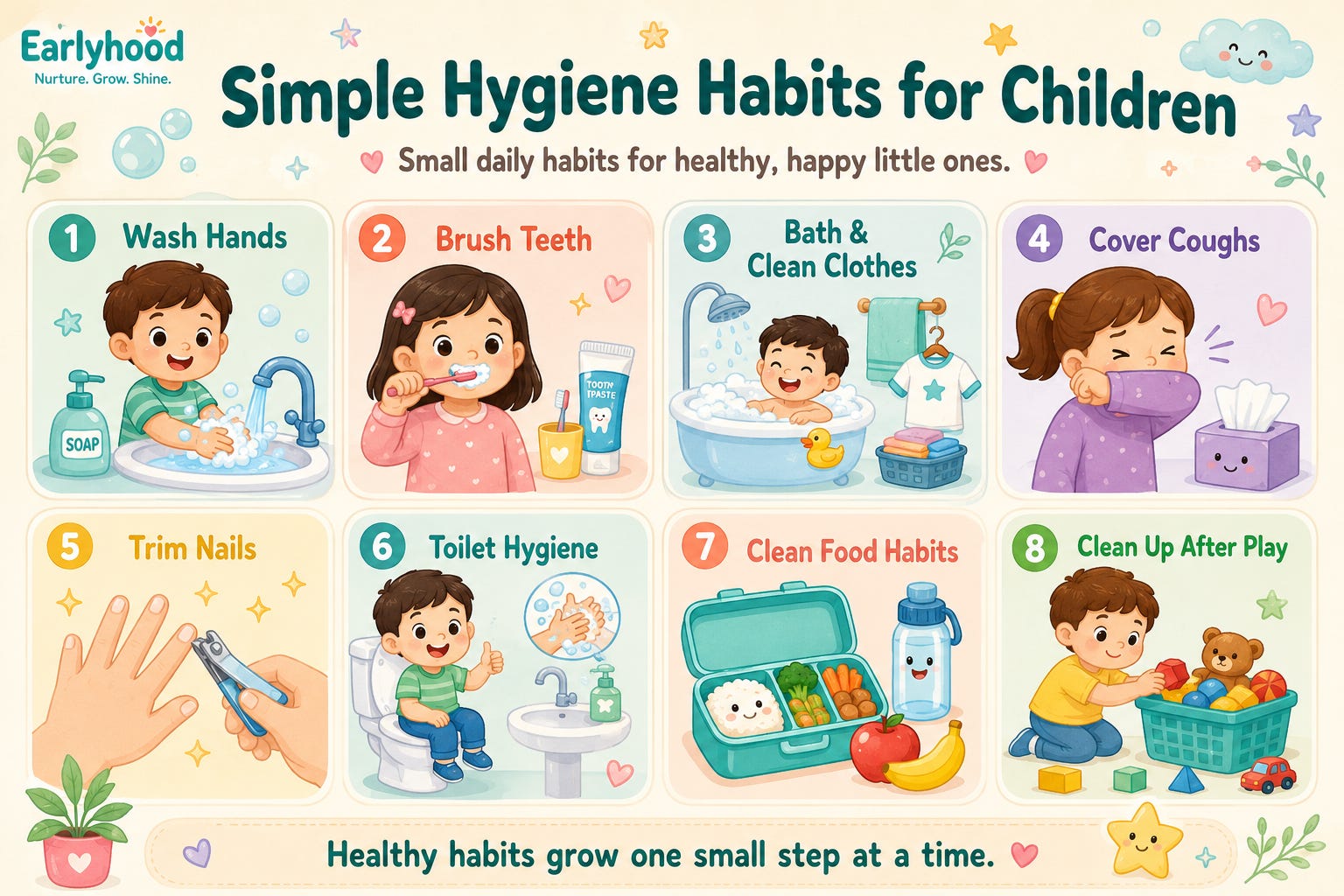
6. Toilet Hygiene
Toilet hygiene is an important preschool-readiness habit.
Children should slowly learn:
Flush after use
Wash hands after toilet
Use tissue or water with help
Tell an adult if clothes are wet
Use the washroom safely
Keep toilet area clean
Avoid touching unnecessary surfaces
Young children may need help for many years, especially with cleaning properly. Parents should guide without shame.
Accidents are normal during toilet learning. Avoid scolding.
Say:
“It’s okay. We will clean and try again.”
This keeps toilet learning calm and respectful.
7. Clean Food Habits
Food hygiene is also important.
Children should learn small rules:
Wash hands before eating
Do not eat food that fell on dirty surfaces
Use own water bottle
Do not share half-eaten food
Cover food when needed
Drink clean water
Keep lunchbox clean
Throw waste in dustbin
At preschool age, children may still need reminders.
Use simple phrases:
“Clean hands, then food.”
“Food stays on the plate.”
“Water bottle is for drinking, not playing.”
These small lines become habits over time.
8. Keeping Personal Things Clean
Children should learn to care for their own belongings.
Start with easy tasks:
Keep shoes in place
Put dirty clothes in basket
Keep books back
Close lunchbox after eating
Put used tissue in dustbin
Keep toys back after play
Use clean towel
Keep water bottle closed
This teaches hygiene, responsibility, and independence.
Do not expect perfection. A 3-year-old may need many reminders. A 6-year-old can slowly handle more.
9. Hygiene After Outdoor Play
Outdoor play is healthy and important. Children should not be stopped from playing because they may get dirty.
But after outdoor play, create a clean-up routine.
For example:
Remove shoes
Wash hands and feet
Change sweaty clothes
Drink water
Clean small cuts if any
Keep play items back
This teaches balance: play freely, then clean up.
Children should understand that dirt is not “bad,” but cleaning after play is part of caring for the body.
10. Learning Through Parent Modelling
Children learn hygiene best when they see adults doing it.
If parents wash hands before meals, brush at night, cover coughs, keep things clean, and speak respectfully about hygiene, children copy naturally.
Instead of giving long lectures, model the habit.
Say:
“I am washing my hands before eating.”
“I am brushing before bed.”
“I sneezed, so I will wash my hands.”
“Let’s put dirty clothes in the basket.”
When children see hygiene as a family routine, they accept it more easily.
How to Make Hygiene Fun
Hygiene habits become easier when they feel playful.
Try:
Handwashing song
Brushing chart
Sticker reward
Colourful towel
Child-friendly soap
Toothbrush chosen by child
Story about germs
Pretend play dentist
Clean-up race
Routine picture chart
Keep the tone positive.
Instead of saying, “You are dirty,” say, “Let’s clean up and feel fresh.”
Earlyhood Tip
Use this simple hygiene routine:
Before food, after toilet, after outside, before sleep.
These four moments cover many important daily hygiene habits.
Repeat them calmly every day. Children learn through repetition.
Final Thought
Hygiene is not built in one day.
It grows through small daily routines.
A child who learns to wash hands, brush teeth, cover coughs, keep nails clean, use the toilet properly, and clean up after play slowly becomes more independent and health-aware.
Parents do not need to scare children about germs.
They only need to make hygiene simple, normal, and consistent.
Because healthy habits learned in childhood can support a child for life.
Join the Earlyhood Parent Community for trusted guidance on learning, parenting, health, preschool, activities, and storytime for children aged 0–8.