


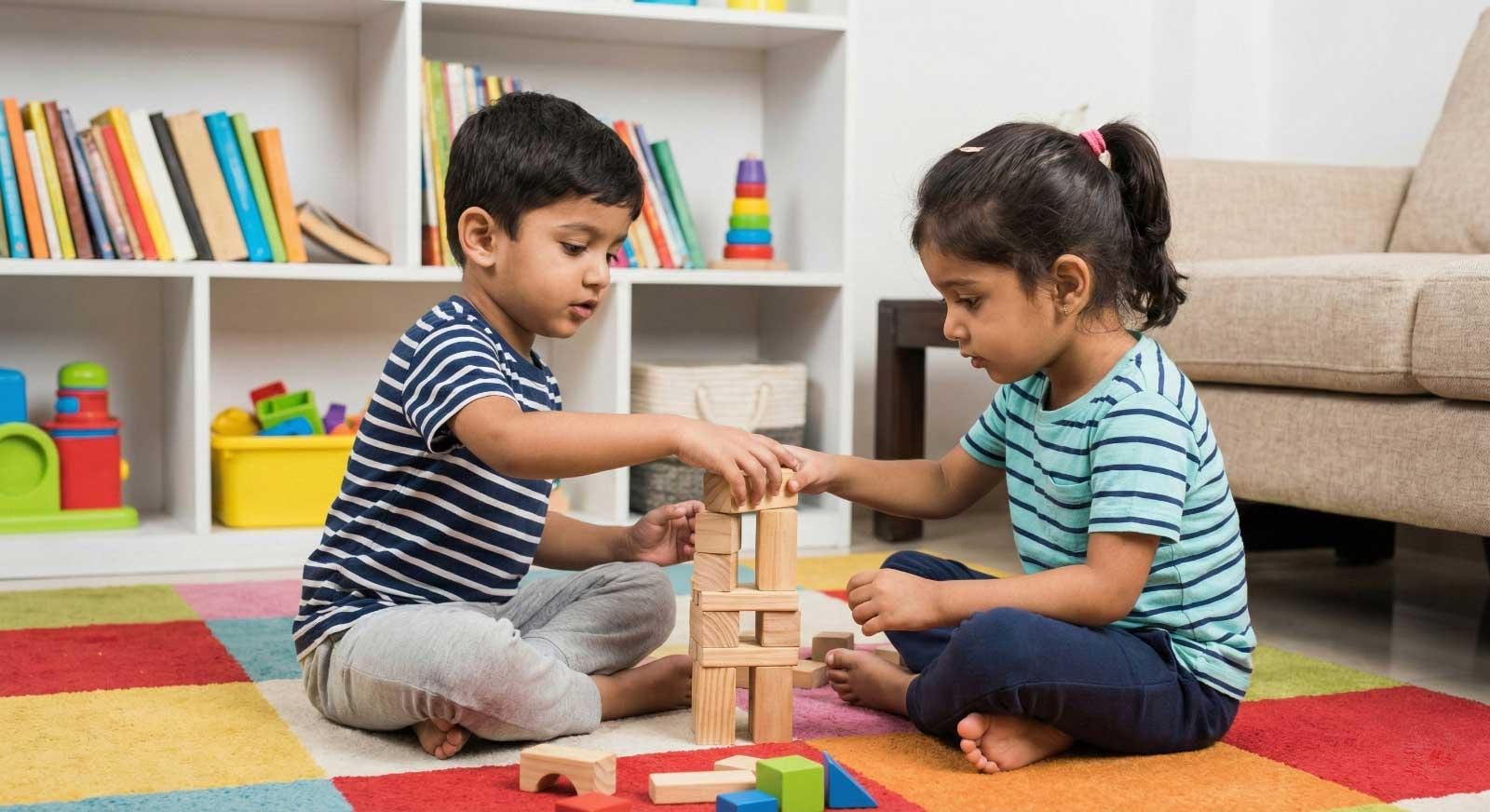
Two children are playing together when both reach for the same toy.
One refuses to share, and the other begins crying.
Should parents immediately insist that the toy be handed over?
Sharing is an important social skill, but young children need time and practice to understand it.
Start by teaching turn-taking
Instead of demanding immediate sharing, explain that everyone can have a turn.
You might say, “You can play with the truck first. Then your friend can have a turn.”
Use a simple timer when appropriate.
Practise through games
Try everyday activities that involve taking turns:
Rolling a ball.
Building a tower together.
Playing simple board games.
Taking turns choosing a song.
Passing crayons during coloring.
These activities help children understand cooperation.
Respect personal belongings
Children can have special toys that they do not want others to use.
Before a playdate, allow your child to put away favourite or fragile items.
Keep a few shared toys available for visitors.
This helps avoid unnecessary conflicts.
Encourage children to ask before taking another person’s belongings.
The CDC identifies playing with other children, sharing and learning friendship skills as important parts of preschool development.
💚 Earlyhood Parent Tip
Model sharing at home.
Children learn cooperation by watching how family members treat one another, not simply by being told to share.
Source: CDC – Positive Parenting Tips for Preschoolers
.