

Why Play Matters for Babies and Toddlers
Understand why play is essential for your child’s development. Learn how simple everyday moments support learning, connection, and growth.

Why Play Matters
When you look at your child playing, it may seem simple. They are stacking blocks, dropping spoons, or laughing at the same game again and again. It can feel small. You may even wonder, Is this really helping them learn?
The answer is yes. Play is not separate from learning. It is learning.
In the early years, children do not need lessons, worksheets, or structured teaching. They learn by doing, touching, repeating, and interacting with you. Play is how their brain understands the world.
This means something important for you as a parent: you are already giving your child what they need when you sit with them, respond to them, and join their play in small ways.
What Is Really Happening During Play
When your child plays, many things are happening at the same time.
They are learning how their body moves.
They are learning how objects behave.
They are learning how to communicate.
They are learning how to connect with you.
A baby dropping a toy is not “just dropping.” They are learning cause and effect.
A toddler repeating the same action is not “being stubborn.” They are practicing and building confidence.
Play builds the foundation for everything that comes later: language, thinking, movement, and emotional security.
“Play is the work of childhood.”
This idea is simple, but it helps us see play differently. It is not extra. It is essential.
You Do Not Need Special Toys
Many parents feel they need the “right” toys to help their child learn. This can create pressure.
The truth is, children learn best from simple things.
A spoon, a bowl, a cloth, a box.
Your face, your voice, your attention.
These everyday objects allow your child to explore freely. They can touch, move, and use them in different ways.
When toys are too complex or do everything on their own, the child becomes passive. But simple objects invite thinking and action.
So if you are wondering, Do I need to buy more toys?
Most of the time, the answer is no.
What matters more is how you use what you already have.
Your Role in Play
You do not need to lead every moment. You do not need to “teach.”
Your role is to be present.
Sit near your child. Watch what they are doing. Follow their lead.
If they bang a spoon, you can gently copy them.
If they look at you, you can smile or respond.
If they make a sound, you can repeat it.
These small interactions build connection and communication.
Play is not about doing more. It is about noticing more.
What Play Looks Like in Real Life
Play does not need extra time in your day. It can happen in the middle of daily life.
While feeding, your child may explore the spoon.
During bath time, they may splash and watch the water move.
While folding clothes, they may pull and touch fabrics.
These are not distractions. These are learning moments.
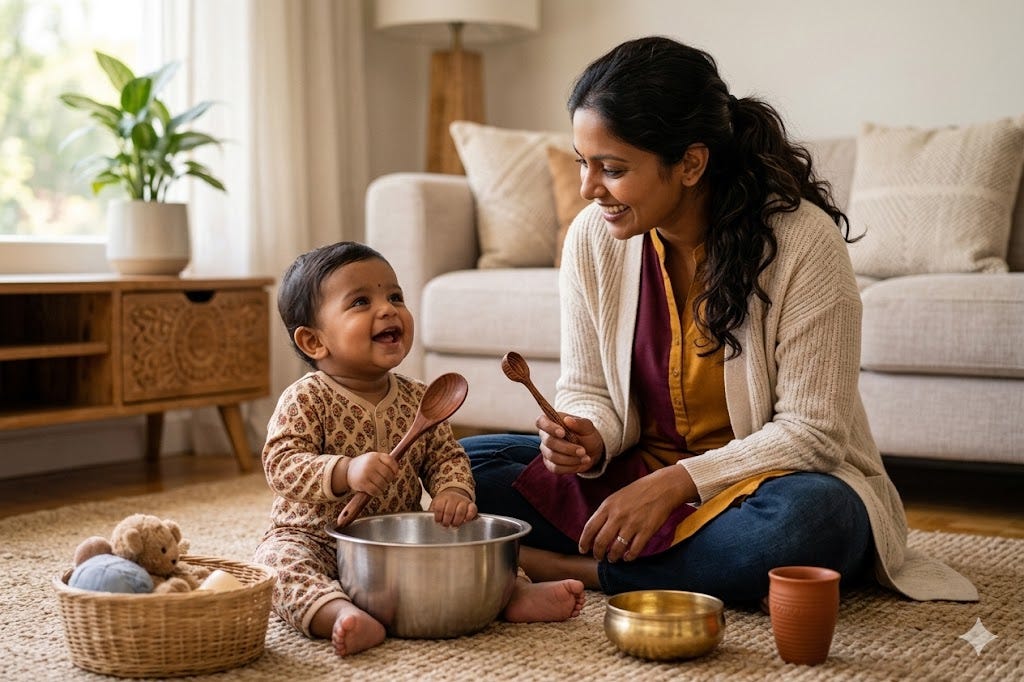
When you slow down just a little and allow these moments, play fits naturally into your day.
Repetition Is Not Boring
One of the most common worries is: Why does my child want to do the same thing again and again?
Repetition is how children learn deeply.
Each time they repeat an action, their brain is strengthening connections. They are becoming more confident in what they can do.
What feels repetitive to you feels meaningful to them.
Instead of stopping it, you can support it by staying nearby and allowing it to continue safely.
Play Builds Connection
Play is not only about skills. It is also about your relationship.
When your child looks at you during play, they are checking for connection.
When you respond, they feel seen and safe.
This emotional safety is what allows learning to happen.
A child who feels connected will explore more, try more, and learn more.
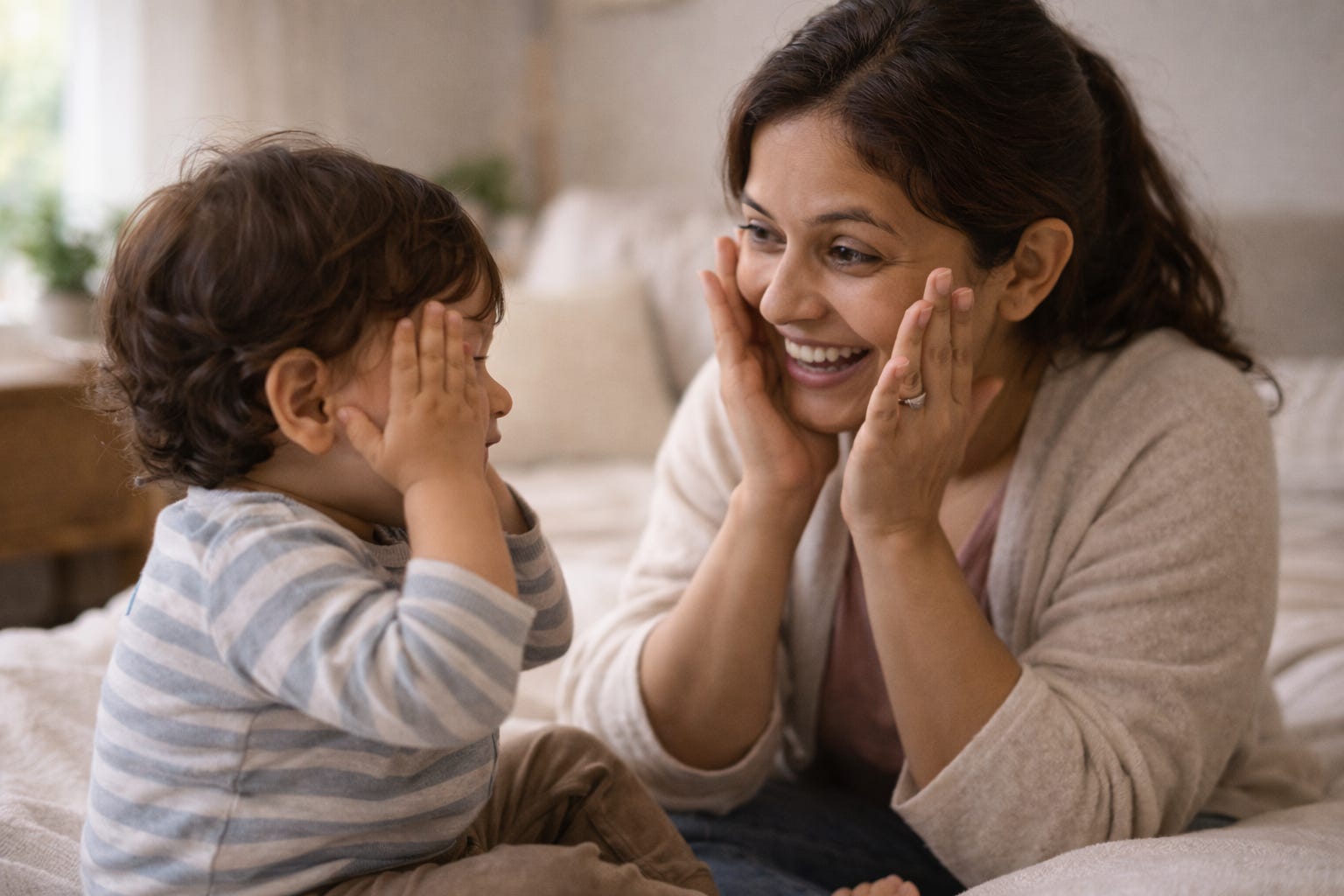
Even a few minutes of fully present play can have a strong impact.
Am I Doing Enough?
This question comes up often.
It is easy to feel like you should be doing more, teaching more, or planning more activities.
But early learning does not need complexity.
If your child has:
Some time to explore
Simple objects to interact with
Your attention and response
Then they are learning.
You do not need to fill every moment. You do not need to entertain constantly.
Children also benefit from having space to explore on their own while knowing you are nearby.
A Simple Way to Start Today
You can begin with something very small.
Sit with your child for 5–10 minutes.
Put away distractions.
Watch what they choose to do.
Then gently join in.
No plan. No pressure.
Just play.
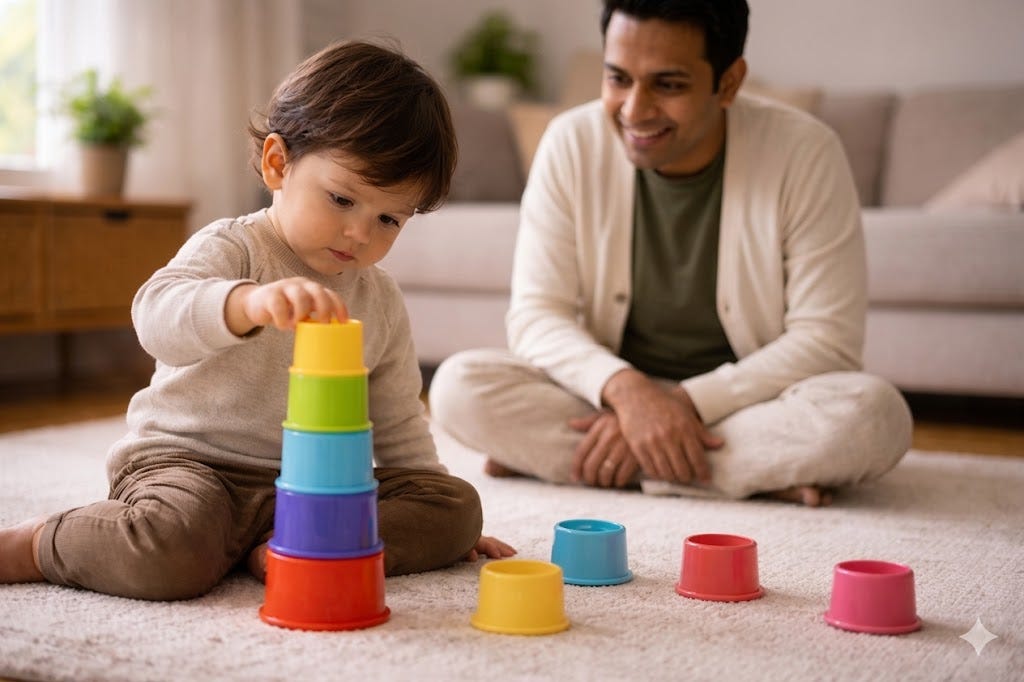
This is enough. This is meaningful.
Moving Forward
As your child grows, play will change. It will become more active, more social, and more imaginative.
But the core will stay the same.
Children learn best when they are:
Engaged
Curious
Connected to you
In the next stage, we will look at how play supports your child’s development month by month, so you can better understand what to expect and how to respond naturally.
For now, you can take one simple idea with you:
Play is not something extra you need to add.
It is something you can notice, support, and enjoy.
Earlyhood creates clarity, not pressure in early learning.