


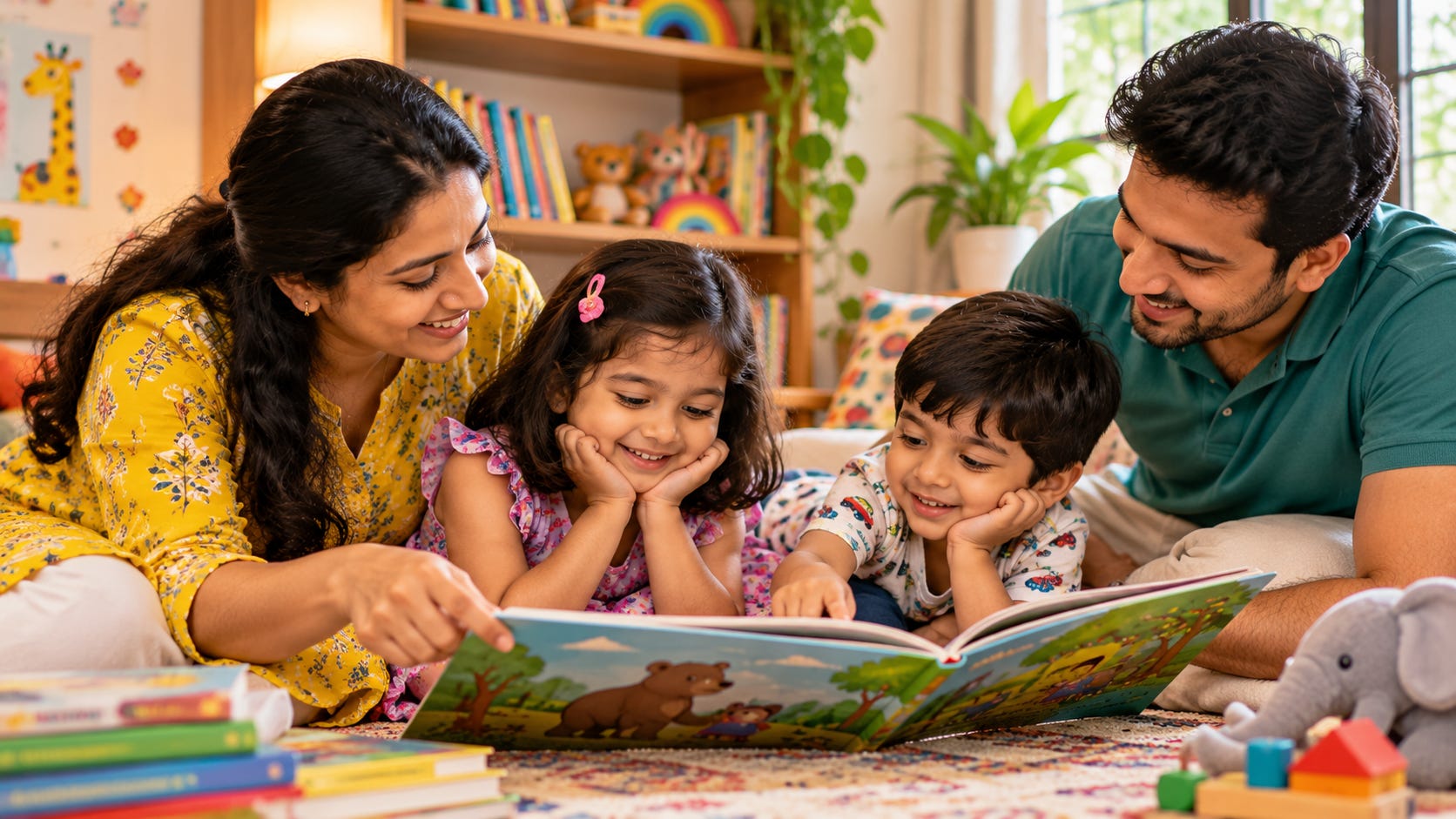
You’re reading a familiar story.
Before turning the page, ask:
“What happens next?”
This tiny question encourages your child to remember, predict and explain.
Stories build more than reading skills
By around age four, many children can tell what comes next in a well-known story.
While reading, children practise:
Listening.
Remembering events.
Understanding sequence.
Learning new words.
Talking about characters.
Predicting what might happen.
Pause sometimes
You don’t need to ask a question on every page.
Try occasional prompts:
“What happened first?”
“Why do you think he is sad?”
“What do you think happens next?”
“How do you think the story ends?”
Let answers be imaginative
Your child’s prediction does not have to match the book.
If they suggest a completely different ending, ask them to tell you more.
That turns reading into conversation.
Use favourite stories repeatedly
Children often enjoy the same book again and again.
Repetition helps them remember language and sequences, and eventually they may begin “reading” parts from memory.
💚 Earlyhood Parent Tip
Don’t always rush to the next page.
A 30-second conversation about one picture can turn reading into active learning.